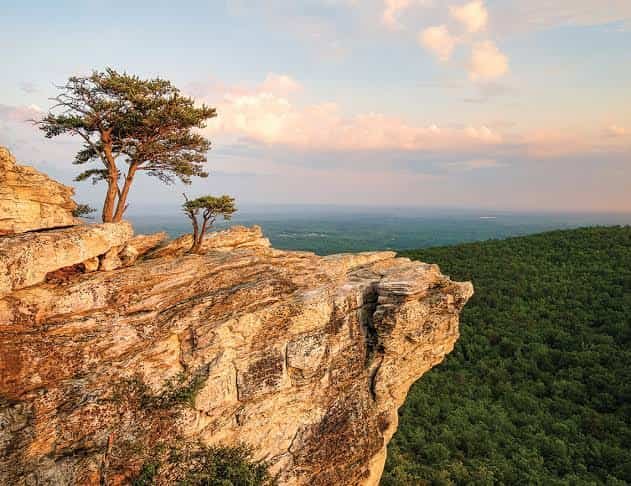
The East Coast doesn’t have the towering peaks or slot canyons that define the West, but it holds a genuinely varied collection of national parks: granite coastline in Maine, a whitewater gorge in Appalachian West Virginia, the most-visited national park in the entire country, and a subtropical wetland found nowhere else on Earth. Eight parks span the Atlantic seaboard states, and most of them, unlike their western counterparts, charge little or nothing to enter.
Here’s the practical guide to all eight: where they sit, what they cost, the numbers that define them, and how such different landscapes all earned federal protection along America’s original coastline.
East Coast National Parks Overview
| Park | Location | Established | Entrance Fee | Signature Feature |
| Acadia | Coastal Maine | 1916/1929 | $35 per vehicle (7 days) | Cadillac Mountain, granite coastline |
| New River Gorge | Southern West Virginia | 1978 (river); 2020 (park) | Free | 876-foot steel arch bridge, whitewater rafting |
| Shenandoah | Northern Virginia, Blue Ridge Mountains | 1935 | $30 per vehicle (7 days) | 105-mile Skyline Drive |
| Great Smoky Mountains | Tennessee/North Carolina | 1934/1940 | Free (parking tag required) | Most-visited national park in the U.S. |
| Congaree | Central South Carolina | 1976/2003 | Free | Largest old-growth bottomland forest in the U.S. |
| Everglades | Southern Florida | 1947 | $35 per vehicle/vessel (7 days) | Subtropical “River of Grass” |
| Biscayne | South Florida, near Miami | 1980 | Free | 95% underwater, part of the Florida Reef |
| Dry Tortugas | Gulf of Mexico, west of Key West | 1992 | $15 per person (built into ferry ticket) | Fort Jefferson, remote coral reef |
Where East Coast National Parks Are Located
These eight parks span roughly 1,500 miles of the Atlantic seaboard, from Acadia on the Maine coast down to the Florida Keys. Acadia and New River Gorge sit furthest north and inland respectively, while Shenandoah and Great Smoky Mountains anchor the Appalachian corridor within a day’s drive of major East Coast cities like Washington, D.C., Charlotte, and Atlanta. Congaree sits in central South Carolina, close to Columbia, and the three Florida parks, Everglades, Biscayne, and Dry Tortugas, cluster in the southern tip of the state within a few hours of Miami.
Because these parks are strung along such a long stretch of coastline, no single road trip covers all eight comfortably. Most travelers focus on a regional cluster: New England’s Acadia, the Appalachian pairing of Shenandoah and Great Smoky Mountains, or the South Florida trio.
What East Coast National Parks Cost to Visit
Fee structures vary dramatically here compared to western parks. Great Smoky Mountains, New River Gorge, Congaree, and Biscayne all charge no entrance fee whatsoever, a rarity concentrated on this side of the country. Acadia and Everglades charge $35 per vehicle for seven days, Shenandoah charges $30, and Dry Tortugas charges $15 per person, though nearly every visitor pays that fee automatically as part of a ferry or seaplane ticket rather than separately.
Great Smoky Mountains, despite having no entrance fee, requires a parking tag for any stay longer than 15 minutes, starting at $5 per day. Everglades charges an additional $100 international visitor surcharge as of 2026, one of eleven parks nationwide with that policy; none of the other seven East Coast parks currently apply it. The $80 America the Beautiful Annual Pass covers all the fee-charging parks on this list and typically pays for itself after two or three visits.
Facts That Distinguish the East Coast’s National Parks
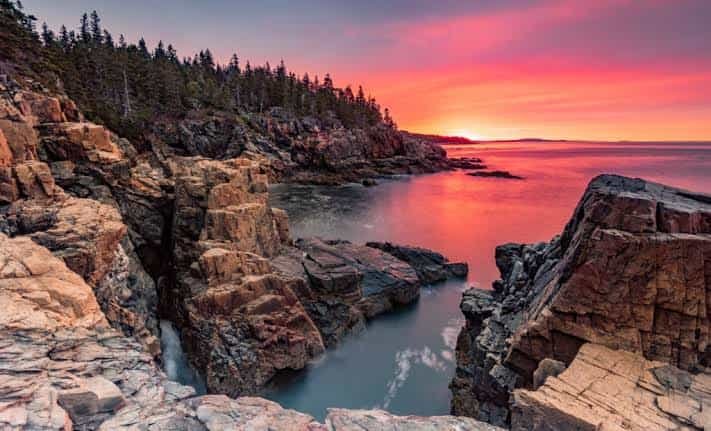
Acadia protects more than 64 miles of granite coastline and catches one of the first sunrises in the country atop Cadillac Mountain for part of the year. New River Gorge, despite its name, protects one of the oldest rivers on Earth, spanned by a bridge that’s the longest steel arch in the Western Hemisphere and one of the top climbing destinations in the country. Shenandoah’s defining feature is the 105-mile Skyline Drive along the Blue Ridge Mountain crest, while Great Smoky Mountains draws more than 12 million visitors a year, more than any other national park in the system, thanks to its free admission and proximity to a huge share of the eastern population.
Congaree protects the largest remaining tract of old-growth bottomland hardwood forest in the country, along with a rare synchronous firefly display each spring. Everglades is the largest subtropical wilderness in the U.S. and the only place on Earth where alligators and crocodiles share the same habitat. Biscayne is roughly 95% underwater, protecting part of the Florida Reef, while Dry Tortugas centers on Fort Jefferson, the largest all-masonry fort in the country, reachable only by boat or seaplane.
The History Behind East Coast National Parks
Several of these parks share an unusual origin: unlike western parks carved from land the federal government already controlled, eastern parks often required assembling private land parcel by parcel, sometimes displacing existing residents in the process. Shenandoah and Great Smoky Mountains both required extensive land acquisition through the 1920s and 1930s, funded partly through private philanthropy, including a significant Rockefeller family contribution that helped establish the Smokies.
Acadia followed a similar private-land model, built almost entirely from land donated by conservationist George B. Dorr starting in 1916. Everglades emerged from a mid-20th-century fight against plans to drain the wetlands entirely, while Biscayne was saved from a proposed 1960s industrial seaport and resort development. New River Gorge represents the newest addition to this list by far, protected first as a National River in 1978 before Congress redesignated it a full national park and preserve in 2020, becoming West Virginia’s first national park and the 63rd in the entire system.
Frequently Asked Questions
Q1. Which East Coast national park is best for a first-time visitor with limited time?
Great Smoky Mountains and Shenandoah both offer highly accessible scenic drives and short hikes reachable within a day trip from major East Coast cities, making either a strong choice for visitors without much time or backcountry experience.
Q2. Are the free East Coast parks actually free, or are there hidden costs?
The entrance itself is genuinely free at Great Smoky Mountains, New River Gorge, Congaree, and Biscayne, though specific activities carry separate costs: Great Smoky Mountains requires a parking tag, and Biscayne’s best features require a paid boat tour since most of the park is water.
Q3. Can I combine Everglades, Biscayne, and Dry Tortugas into one South Florida trip?
Yes, it’s genuinely feasible given their proximity, though Dry Tortugas requires a full day due to the ferry or seaplane crossing, while Everglades and Biscayne can each be visited in a half-day if time is limited.
Q4. Why don’t more East Coast parks charge the international visitor surcharge that applies at western parks?
The surcharge currently applies only to eleven specific high-traffic parks nationwide, and Everglades is the only East Coast park on that list. Fee policy is set individually per park based on visitation volume and other factors, so it’s worth checking each park’s current rules before a trip.