Tennessee shares its one national park with North Carolina, but the Tennessee side happens to hold the park’s busiest gateway: Gatlinburg, the small mountain town most closely associated with Great Smoky Mountains National Park, the most-visited national park in the entire country. More than 12 million people pass through the Smokies each year, and remarkably, the park charges no traditional entrance fee at all.
Here’s the practical guide to Tennessee’s national park: where it sits, what it costs, the numbers behind its record-setting visitation, and the history behind both its no-fee tradition and its Tennessee-side access points.

Great Smoky Mountains National Park Overview
| Category | Details |
| Location | Southern Appalachian Mountains, straddling Tennessee and North Carolina |
| TN gateway towns | Gatlinburg, Townsend |
| Nearest airport | McGhee Tyson Airport (TYS), Knoxville, TN |
| Established | Authorized 1934; dedicated by President Franklin Roosevelt in 1940 |
| Total area | About 522,000 acres (roughly half in Tennessee) |
| Entrance fee | None — the park has never charged a traditional entrance fee |
| Parking tag (required for stays over 15 minutes) | $5 daily, $15 weekly, $40 annual |
| Highest peak | Kuwohi (formerly Clingmans Dome), 6,643 feet, on the TN/NC border |
| Appalachian Trail within park | About 71 miles |
| Annual visitation | Over 12 million, the most-visited national park in the U.S. |
Where the Tennessee Side of the Park Is Located
Great Smoky Mountains straddles the border between eastern Tennessee and western North Carolina, spanning roughly 54 miles from the Pigeon River to the Little Tennessee River. On the Tennessee side, Gatlinburg serves as the main and busiest entrance point, packed with lodging, restaurants, and attractions right up against the park boundary, while nearby Townsend offers a quieter alternative gateway with easier access to Cades Cove.
McGhee Tyson Airport in Knoxville is the most convenient air access point for the Tennessee side, with roughly a 45-minute drive to reach Gatlinburg. Newfound Gap Road connects the Tennessee and North Carolina sides directly through the park, climbing to over 5,000 feet at its highest point.
What It Actually Costs to Visit
Great Smoky Mountains has never charged a traditional entrance fee, a direct legacy of how the land was assembled in the 1930s, through private donations and land purchases rather than existing federal territory, with deed restrictions prohibiting admission charges. What changed in 2023 is parking. The park’s “Park it Forward” program now requires a valid parking tag for any vehicle parked longer than 15 minutes anywhere within the park boundary, including on the Tennessee side. A daily tag costs $5, a weekly tag costs $15, and an annual tag costs $40, and one tag covers parking anywhere in the park regardless of which state side you’re visiting.
Simply driving through the park without stopping to park doesn’t require a tag. The America the Beautiful Pass does not substitute for a parking tag, since the park has no entrance fee for the pass to waive. Tags can be purchased at visitor centers, automated kiosks, or online in advance through Recreation.gov.
Facts That Define the Tennessee Side of the Smokies
The Tennessee side holds Cades Cove, one of the park’s most popular destinations, an 11-mile loop road through a historic mountain valley dotted with preserved log cabins, churches, and grist mills, along with some of the best wildlife viewing in the park, including black bears and white-tailed deer commonly spotted from the road. Gatlinburg itself sits directly against the Sugarlands Visitor Center, making the Tennessee entrance the single busiest access point in the entire park.
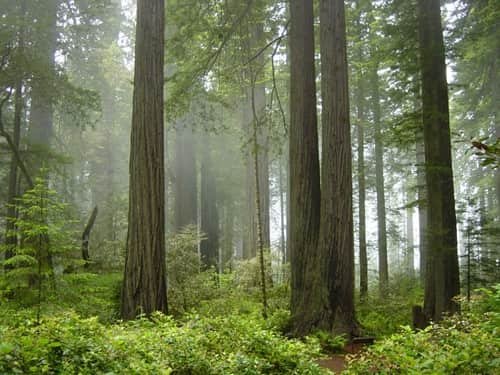
The park’s distinctive blue-gray haze, the source of its name, comes from natural vapors released by the dense temperate rainforest canopy covering much of the Tennessee-side slopes. More than 90 historic structures remain preserved within the park, remnants of the farming and logging communities that occupied this land before it became protected wilderness.
The History Behind the Park’s Tennessee Side
Unlike most western parks carved from land the federal government already controlled, Great Smoky Mountains required an unusually complicated land assembly process on both sides of the state line. Thousands of small farms and logging operations had to be purchased and vacated across Tennessee and North Carolina, funded largely through private donations, including a crucial $5 million contribution from the Rockefeller family that helped push the effort across the finish line. Congress authorized the park in 1934, and President Franklin Roosevelt formally dedicated it in 1940.
Civilian Conservation Corps crews built much of the summit roads, cabins, and trail infrastructure still in use today during that same decade, gradually opening the mountain to visitors on both the Tennessee and North Carolina sides. In September 2024, the U.S. Board on Geographic Names voted to restore the park’s highest peak’s original Cherokee name, Kuwohi, meaning “mulberry place,” replacing the name Clingmans Dome, which had honored a Confederate general since 1859, following years of advocacy from the Eastern Band of Cherokee Indians.
Frequently Asked Questions
Q1. Is entering from the Tennessee side different from entering through North Carolina?
No, the park charges the same no-entrance-fee, parking-tag system regardless of which state side you enter from. The main practical difference is which towns and trailheads you’re closest to, Gatlinburg and Townsend on the Tennessee side versus Cherokee on the North Carolina side.
Q2. What’s the best day-trip destination from the Tennessee side?
Cades Cove is the most popular choice, offering an 11-mile scenic loop with historic structures and strong wildlife viewing odds, though it also draws heavy traffic during peak season, so arriving early in the morning helps avoid the worst congestion.
Q3. Does the parking tag guarantee me a spot at popular Tennessee-side trailheads?
No. The tag only permits your vehicle to park legally within the park; it doesn’t reserve a specific space. Popular Tennessee-side spots like Cades Cove and Laurel Falls fill up quickly, especially on weekends, so arriving early remains the best strategy.
Q4. Are pets allowed on Tennessee-side hiking trails?
No, pets are restricted to just two trails in the entire park, both paved and relatively short, regardless of which state side you’re on. This is stricter than most national parks, so travelers hiking with dogs should check current pet policies before their trip.