California holds more national parks than any other state in the country: nine in total, ranging from the tallest trees on Earth to the lowest, hottest point in North America. No other state offers this kind of range within a single day’s drive in some cases, from alpine granite peaks to desert dunes to a fog-shrouded Pacific archipelago.
Here’s the practical guide to all nine: where each one sits, what it costs to visit, the numbers that define them, and how such wildly different landscapes all ended up protected under the same designation.
California’s National Parks Overview
| Park | Location | Established | Vehicle Entrance Fee | Signature Feature |
| Yosemite | Sierra Nevada, east-central CA | 1890 | $35 (7 days) | El Capitan, Half Dome, Yosemite Falls |
| Sequoia | Southern Sierra Nevada | 1890 | $35 (shared with Kings Canyon) | General Sherman Tree |
| Kings Canyon | Southern Sierra Nevada | 1940 | $35 (shared with Sequoia) | Deep glacial canyon, giant sequoias |
| Death Valley | Mojave Desert, CA-NV border | 1994 (park) | $30 (7 days) | Lowest point in North America |
| Joshua Tree | Southeastern CA desert | 1994 (park) | $30 (7 days) | Mojave/Colorado Desert convergence |
| Redwood | Northern coast, near Oregon border | 1968 | Free (state park sections charge fees) | Tallest trees on Earth |
| Channel Islands | Pacific Ocean, off Ventura/Santa Barbara | 1980 | Free (ferry costs separate) | Endemic island fox |
| Pinnacles | Gabilan Mountains, central CA | 2013 (park) | $30 (7 days) | Ancient volcanic spires, condors |
| Lassen Volcanic | Southern Cascade Range | 1916 | $30 (7 days) | All four volcano types in one park |
Where California’s National Parks Are Located
California’s nine parks spread across nearly the full length of the state. Yosemite, Sequoia, and Kings Canyon cluster in the Sierra Nevada, roughly three to five hours from the Bay Area or Los Angeles depending on the specific entrance. Death Valley and Joshua Tree sit in the southeastern desert regions, both within a few hours of Las Vegas or Los Angeles. Redwood occupies the far northern coast near the Oregon border, a genuine haul from either major metro area, while Channel Islands sits just offshore from Ventura and Santa Barbara, reachable only by boat or small plane. Pinnacles sits inland from Monterey and Salinas, and Lassen Volcanic anchors the southern end of the Cascade Range in the state’s northeast.
Because the parks are so spread out, visiting all nine in one trip isn’t realistic for most travelers. Los Angeles International and San Francisco International airports offer the best access to the southern and northern clusters respectively, while Fresno serves as a useful regional hub for Yosemite, Sequoia, and Kings Canyon together.
What California’s National Parks Cost to Visit
Fees vary by park, though most fall in a similar range. Yosemite charges $35 per vehicle for seven days, matching several of the state’s other heavily visited parks, while Sequoia and Kings Canyon share a single $35 entrance fee that covers both. Death Valley, Joshua Tree, Pinnacles, and Lassen Volcanic each charge $30. Redwood and Channel Islands charge no National Park Service entrance fee at all, though Redwood’s adjoining state park sections do have their own separate day-use fees, and Channel Islands requires a paid ferry or flight to actually reach the islands.
For anyone visiting three or more parks in a year, the $80 America the Beautiful Annual Pass typically pays for itself quickly and covers every fee-charging park nationwide, not just California’s. One detail worth flagging for 2026: Yosemite and Death Valley are not currently among the eleven national parks charging the additional $100 nonresident surcharge, but always confirm current policy directly with each park before a trip, since fee structures are reviewed annually.
Facts That Distinguish California’s Parks
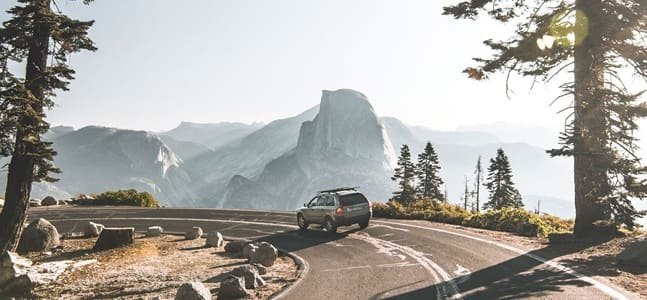
Yosemite is defined by its glacially carved valley, home to El Capitan, one of the largest exposed granite monoliths on Earth, and Yosemite Falls, among the tallest waterfalls in North America. Sequoia protects the General Sherman Tree, the largest living tree on the planet by volume, while neighboring Kings Canyon holds a canyon that reaches depths exceeding the Grand Canyon in places, carved by glaciers rather than a single river.
Death Valley holds the record as the hottest and driest place in North America, with Badwater Basin sitting 282 feet below sea level, just 15 miles from an 11,000-foot peak. Joshua Tree sits exactly where the Mojave and Colorado Deserts meet, giving it two distinct desert ecosystems within one boundary. Redwood protects nearly 45% of the world’s remaining old-growth coast redwood forest, including Hyperion, the tallest known tree on Earth. Channel Islands, sometimes called “California’s Galápagos,” holds more than 150 species found nowhere else, including the island fox. Pinnacles serves as a major release site for endangered California condors, and Lassen Volcanic is one of the only parks anywhere containing all four recognized volcano types within a single boundary.
The History Behind California’s National Parks
California’s national park story begins remarkably early. Yosemite Valley was first protected by President Abraham Lincoln in 1864, predating Yellowstone’s 1872 designation as the world’s first national park, though Yosemite itself didn’t become a fully designated national park until 1890, the same year Sequoia was established just days apart. Kings Canyon followed decades later in 1940, absorbing the earlier General Grant National Park established back in 1890.
Lassen Volcanic became a park in 1916 following a dramatic real-life eruption just a year earlier, while Redwood and Channel Islands both emerged from 1960s and 1970s conservation battles against logging and development pressure, becoming parks in 1968 and 1980 respectively. Death Valley and Joshua Tree both began as national monuments decades before Congress elevated them to full park status in 1994 through the California Desert Protection Act, the same legislation that expanded Death Valley into the largest national park in the contiguous United States. Pinnacles holds the distinction of being the most recent addition, redesignated from a national monument to a full national park in 2013.
Frequently Asked Questions
Q1. Which California national park is best for a first-time visitor with limited time?
Yosemite offers the most iconic scenery within the most manageable single-day or weekend visit, with well-developed infrastructure and dramatic views accessible without extensive backcountry hiking.
Q2. Can I visit Sequoia and Kings Canyon in one trip without paying two entrance fees?
Yes, the two parks share a single $35 entrance fee, and they’re connected by the Generals Highway, making them a natural pairing for one combined visit rather than two separate trips.
Q3. Is it worth visiting Channel Islands if I’m short on time or budget?
It requires more planning than the other parks, since reaching the islands means booking a ferry or flight separately, with no NPS entrance fee but a real transportation cost. It’s best suited for travelers with at least a full day to dedicate specifically to the crossing and island exploration.
Q4. Which parks should I combine if I want to see contrasting desert and mountain scenery in one trip?
Death Valley and Joshua Tree pair naturally for an all-desert itinerary, while adding Sequoia or Kings Canyon afterward gives a dramatic contrast between desert extremes and high Sierra granite peaks and giant sequoias within a single extended road trip.