Georgia is one of about 20 U.S. states with no official national park, but that could change soon. As of mid-2026, a bipartisan bill sits before Congress that would elevate Ocmulgee Mounds, a site protecting more than 12,000 years of continuous human habitation near Macon, from a National Historical Park to a full National Park, Georgia’s first. The legislation has cleared an early congressional hurdle but still needs to pass both chambers and be signed into law before it’s official.
Here’s the practical guide to Georgia’s national park landscape as it stands today: what the state actually has, what the pending Ocmulgee legislation would change, the numbers behind the site’s ancient history, and how the effort has evolved over multiple sessions of Congress.
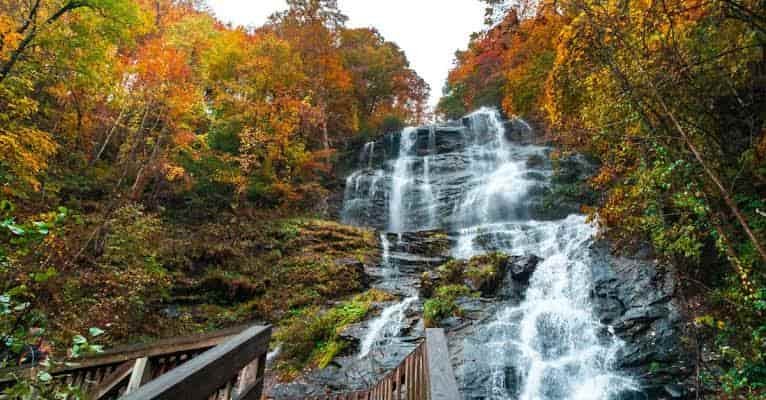
Georgia’s National Park Service Sites Overview
| Site | Location | Current Designation | Entrance Fee | Signature Feature |
| Ocmulgee Mounds | Macon, GA | National Historical Park (redesignation to full national park pending) | Free | 12,000+ years of continuous human habitation, Mississippian-era mounds |
| Cumberland Island | Georgia coast, near St. Marys | National Seashore | $10 per person (plus ferry fee) | Wild horses, undeveloped barrier island |
| Chattahoochee River | Atlanta metro area | National Recreation Area | Free (parking fee at some units) | Urban river corridor |
| Kennesaw Mountain | Northwest of Atlanta | National Battlefield Park | Free | Civil War battlefield |
| Andersonville | Southwest Georgia | National Historic Site | Free | Civil War POW camp memorial |
Where Georgia’s Key Sites Are Located
Ocmulgee Mounds sits just outside downtown Macon, in the center of the state, along the Ocmulgee River, making it easily reachable from Atlanta in about an hour and a half. Cumberland Island sits off Georgia’s southeastern coast near St. Marys, accessible only by ferry, and functions as the state’s closest equivalent to a wilderness national park experience, with wild horses roaming undeveloped beaches and maritime forest. Chattahoochee River National Recreation Area threads through the Atlanta metro area itself, while Kennesaw Mountain and Andersonville preserve significant Civil War history in north and southwest Georgia respectively.
Hartsfield-Jackson Atlanta International Airport serves as the natural hub for reaching any of these sites, with Macon, Kennesaw, and the Chattahoochee corridor all within a two-hour drive of the airport.
What the Pending Ocmulgee Legislation Would Actually Change
The current bill, H.R. 9416, introduced by Representative Austin Scott on June 24, 2026, is notably narrower than an earlier, failed effort from 2024. That original proposal would have expanded Ocmulgee’s boundaries southward along the river corridor and added the word “Preserve” to the designation, but it stalled partly because the National Park Service objected to managing additional land already overseen by other agencies. The current version simply removes the word “historical” from the site’s name, redesignating it “Ocmulgee Mounds National Park” without expanding its roughly 3,300-acre footprint.
Supporters argue the redesignation alone would meaningfully boost visibility and tourism; Representative Sanford Bishop has cited estimates suggesting the change could bring more than $34 million in annual tax revenue to the region. The bill cleared a House Natural Resources subcommittee hearing on July 1, 2026, but still requires passage by the full House, the Senate, and a presidential signature before it becomes law, so nothing is final yet.
Facts That Make Ocmulgee Mounds Historically Significant
Ocmulgee Mounds protects evidence of continuous human habitation stretching back more than 12,000 years, encompassing multiple prehistoric cultures including the Archaic, Woodland, and Mississippian peoples. Between roughly 1300 and 1650, the Lamar Culture constructed the site’s namesake earthen mounds as ceremonial and temple structures, some of which remain visible and walkable today. The site holds deep ongoing significance for the Muscogee (Creek) Nation, whose ancestors built and used these mounds before forced removal from the region in the 19th century.
President Franklin D. Roosevelt designated the site a national monument in 1936, and it later became a National Historical Park under the John D. Dingell, Jr. Conservation, Management, and Recreation Act. In February 2025, Congress passed legislation expanding the monument’s boundary as part of a broader public lands package, signed into law that same year, ahead of the current redesignation push.
The History Behind Georgia’s National Park Push
Advocacy for elevating Ocmulgee to full national park status traces back several years, championed by the Ocmulgee National Park and Preserve Initiative alongside the Georgia Conservancy and the National Parks Conservation Association. The effort has spanned four separate sessions of Congress, with a 2024 bill failing to pass before a scaled-back version was reintroduced in 2025 and again refined into the current, narrower redesignation bill in June 2026.
Notably, the campaign has drawn genuinely bipartisan support in Georgia’s congressional delegation, spanning both Democratic senators and Republican representatives, a rare point of alignment reflecting broad local interest in the tourism and economic benefits a “national park” label is expected to bring to Middle Georgia.
Frequently Asked Questions
Q1. Is Ocmulgee Mounds officially a national park yet?
Not as of this writing. The bill to redesignate it passed an early House subcommittee hearing in July 2026 but still needs to clear the full House, the Senate, and receive a presidential signature before the change becomes official.
Q2. Would the redesignation change how visitors experience the site?
Not significantly in the short term. The current bill only changes the name from “National Historical Park” to “National Park” without altering the site’s boundaries, so trails, exhibits, and access would likely remain the same, though visibility and visitation may increase.
Q3. What’s the closest thing Georgia has to a wilderness national park experience right now?
Cumberland Island National Seashore offers the closest comparison, with undeveloped beaches, wild horses, and maritime forest reachable only by ferry, providing a genuinely wild coastal experience even without the “national park” title.
Q4. Why did the 2024 version of the Ocmulgee bill fail while the 2026 version has advanced further?
The 2024 bill proposed expanding the park’s boundaries into land already managed by other federal and state agencies, which the National Park Service opposed. The 2026 version dropped that expansion and simply renames the existing site, removing a major point of institutional resistance.