Not every park makes you plan two reservations before you even reach the entrance station. Rocky Mountain does, and it trips up a surprising number of first-time visitors. Between late May and mid-October, getting into the park during daytime hours means booking a timed entry slot online in advance, on top of the standard entrance fee — a system that exists because roughly four million people now try to squeeze through the same mountain corridor every year.
None of that should scare anyone off. Once you understand how the pieces fit together, Rocky Mountain is one of the more manageable big parks to plan around. Here’s the breakdown: where it sits, what it costs, how the reservation system actually works, and the century of history behind protecting one of Colorado’s most iconic landscapes.
Rocky Mountain National Park Overview
| Category | Details |
| Location | North-central Colorado, Front Range of the Rocky Mountains |
| Counties | Larimer, Grand, and Boulder |
| Nearest towns | Estes Park (east side), Grand Lake (west side) |
| Distance from Denver | About 70 miles to the east entrance |
| Nearest airport | Denver International Airport (DEN) |
| Established | January 26, 1915 — the 10th U.S. national park |
| Total area | About 265,800 acres (roughly 415 square miles) |
| Vehicle entrance fee | $30 (1-day pass) or $35 (7-day pass) |
| Timed entry reservation fee | $2 processing fee, separate from entrance fee |
| Timed entry season | Late May through mid-October |
| America the Beautiful Annual Pass | $80 (all U.S. national parks) |
| International visitor surcharge (2026) | $100 per person, age 16+ (waived with a qualifying annual pass) |
| Highest point | Longs Peak, 14,259 feet |
| Lowest point | Big Thompson River, about 7,630 feet |
| Trail Ridge Road | Highest paved through-road in the U.S. national park system |
| UNESCO status | World Biosphere Reserve since 1976 |
| Annual visitation | Around 4 million visitors |
Where Rocky Mountain National Park Is Located
Rocky Mountain sits in north-central Colorado, straddling the Continental Divide within the Front Range, about 70 miles northwest of Denver. The park has two main sides that feel almost like separate destinations: Estes Park on the east, where most visitors enter, and the smaller, quieter town of Grand Lake on the west.
Connecting the two is Trail Ridge Road, a seasonal highway that climbs above 12,000 feet and holds the distinction of being the highest continuously paved through-road in the entire national park system. It typically opens by late May and closes with the first heavy snows of fall, so anyone planning a west-to-east crossing needs to check current road status before committing to that route.
Denver International Airport is the practical starting point for most visitors, with roughly an hour and a half drive to reach the park’s eastern boundary near Estes Park, depending on traffic through the foothills.
Entrance Fees and the Timed Entry System
Getting into Rocky Mountain costs $30 for a one-day vehicle pass or $35 for a seven-day pass, a slightly different structure than the flat seven-day fee used at most other major parks. Visitors planning multiple park visits during the year often find the $80 America the Beautiful Pass more economical, since it covers entry to every federal recreation site nationwide.
As of 2026, non-U.S. residents aged 16 and older face an additional $100 surcharge per person on top of the standard entrance fee, part of the same policy applied at ten other high-traffic national parks. A $250 non-resident annual pass waives that surcharge and typically works out cheaper for families or groups.
Where Rocky Mountain differs sharply from parks like Yosemite or Zion is the timed entry system, active from late May through mid-October. During that window, visitors need a separate reservation, on top of their entrance pass, just to drive in during peak daytime hours. There are two reservation types: a general timed entry permit good for most of the park, and a separate Timed Entry Plus Bear Lake Road permit required for the park’s single busiest corridor. Reservations release on Recreation.gov roughly a month in advance, with a smaller batch released the evening before, at 7 p.m. Mountain Time, for late planners willing to gamble on availability.
Outside the reservation window hours — generally before 9 a.m. or after 2 p.m. — visitors can enter without a timed permit at all, which is worth knowing if you’re flexible about arrival time and want to skip the reservation scramble entirely.
Facts That Define the Park
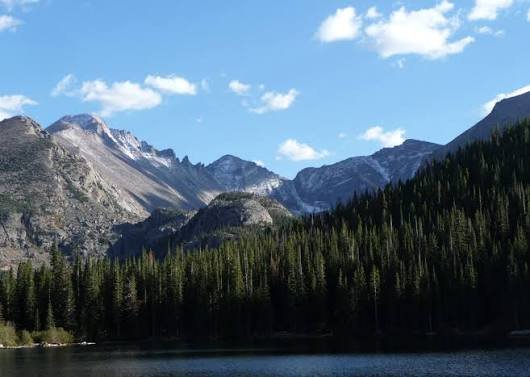
Rocky Mountain’s defining trait is vertical range. The park stretches from around 7,630 feet at its lowest point along the Big Thompson River up to 14,259 feet at the summit of Longs Peak, its highest point. Nearly a third of the park sits above treeline, meaning visitors can move from forested valleys to windswept alpine tundra in the space of a single drive.
More than 70 named peaks rise above 12,000 feet within the park’s boundaries, and over 300 miles of trails wind through montane forest, subalpine meadow, and high alpine terrain. Wildlife here draws serious attention too — elk herds are common sights near Estes Park in fall, alongside bighorn sheep, moose, black bears, and mountain lions throughout the backcountry.
In 2009, Congress formally designated roughly 95% of the park as protected wilderness, locking in its undeveloped character for the long term. The park was also named a UNESCO World Biosphere Reserve in 1976, recognition of its ecological significance within the broader Rocky Mountain ecosystem.
The History Behind Rocky Mountain National Park
People have used this landscape for at least 10,000 years, with the Ute and Arapaho peoples traveling through these mountains for generations before European settlement reached the area. By the early 1900s, naturalist Enos Mills, often called the father of Rocky Mountain National Park, began campaigning heavily for federal protection, giving lectures and writing extensively about the region’s alpine scenery.
Interestingly, part of what made the park’s approval possible was economic rather than purely sentimental: Congress only signed off once surveys confirmed there was no significant mineral wealth worth extracting from the mountains, removing a major point of resistance from mining interests. President Woodrow Wilson signed the Rocky Mountain National Park Act into law on January 26, 1915, making it the tenth national park in the country. The official dedication ceremony followed later that year, on September 4, 1915, at Horseshoe Park, drawing a crowd that included Mills himself and Stephen Mather, who would soon become the first director of the National Park Service.
Development accelerated through the following decades. The Civilian Conservation Corps built much of the park’s infrastructure during the 1930s, including the construction of Trail Ridge Road, which opened to traffic in July 1932 and remains the park’s signature engineering achievement.
Frequently Asked Questions
Q1. Do I need a timed entry reservation to visit Rocky Mountain in winter?
No. Timed entry reservations only apply from late May through mid-October. Outside that window, a standard entrance fee is all that’s required, though some roads and facilities have limited winter access.
Q2. What happens if I arrive without a timed entry reservation during peak season?
You’ll be turned away at the entrance station if you arrive during the restricted hours (generally 9 a.m. to 2 p.m. for the general permit corridor). Arriving before or after those hours doesn’t require a timed entry reservation at all.
Q3. Is Trail Ridge Road open year-round?
No. It typically opens in late May once snow clearing is complete and closes for the season by mid-October, sometimes earlier if an early storm hits. Check current conditions before planning a west-to-east or east-to-west crossing.
Q4. Can one timed entry reservation cover both the general park and Bear Lake Road?
No, they’re separate permits. The Bear Lake Road corridor requires its own Timed Entry Plus reservation due to how heavily trafficked that specific area is, even if you already hold a general timed entry permit for the rest of the park.