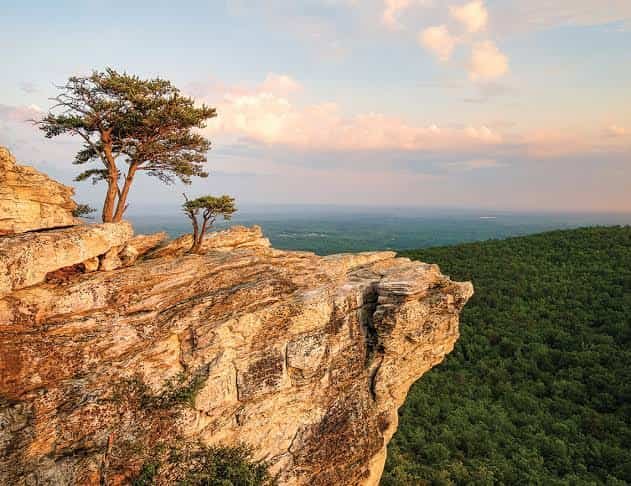
Texas holds just two national parks, but both sit at genuine extremes: Big Bend protects nearly 120 miles of the Rio Grande winding through Chihuahuan Desert wilderness, while Guadalupe Mountains contains the highest point in the entire state, built from the exposed remains of a 260-million-year-old fossil reef. Neither draws the crowds of California or Utah’s parks, and that relative isolation is a big part of their appeal.
Here’s the practical guide to both: where they sit, what they cost, the numbers that define them, and the very different paths each took to federal protection.
Texas’s National Parks Overview
| Park | Location | Established | Entrance Fee | Signature Feature |
| Big Bend | Far West Texas, along the Rio Grande | 1944 | $30 per vehicle (7 days) | Chihuahuan Desert, Rio Grande, dark skies |
| Guadalupe Mountains | West Texas, near the New Mexico border | 1972 | $10 per person, age 16+ | Guadalupe Peak, highest point in Texas |
Where Texas’s National Parks Are Located
Big Bend sits in the far southwestern corner of Texas, in remote Brewster County, roughly 100 miles from the nearest town of any size (Alpine) and about a three-and-a-half hour drive from Midland International Airport. Guadalupe Mountains National Park sits further north and west, just across the state line from Carlsbad Caverns in New Mexico, roughly two hours east of El Paso.
Both parks share a defining trait: genuine remoteness. Neither sits near a major metro area, and both require deliberate planning rather than a casual day trip. Many visitors combine the two into a single West Texas road trip, sometimes adding Carlsbad Caverns just across the New Mexico border given how close it sits to Guadalupe Mountains.
What Texas’s National Parks Cost to Visit
Big Bend charges $30 per vehicle for a standard seven-day pass, $25 for motorcycles, and $15 per person for those arriving on foot or bicycle. Frequent visitors can pick up the $55 Big Bend Annual Pass.
Guadalupe Mountains uses a different structure entirely, charging $10 per person rather than a flat vehicle rate, with children 15 and under admitted free. That means a group of three adults should expect to pay $30 total rather than one flat vehicle charge, a detail that surprises first-time visitors used to the standard per-vehicle model.
For anyone visiting both parks, or combining a Texas trip with parks in neighboring states, the $80 America the Beautiful Annual Pass covers entrance fees at both parks and works nationwide. Neither Big Bend nor Guadalupe Mountains currently charges the additional $100 international visitor surcharge applied at select high-traffic parks elsewhere in the country, so entrance costs stay the same regardless of a visitor’s country of residence.
Facts That Distinguish Texas’s Two Parks
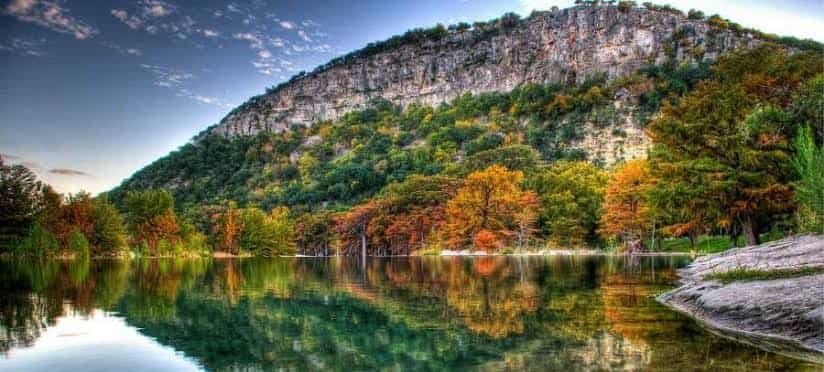
Big Bend protects the largest stretch of Chihuahuan Desert topography found anywhere in the United States, spanning desert floor, the Chisos Mountains, which sit almost entirely within the park’s boundaries, and roughly 118 miles of the Rio Grande forming the international border with Mexico. Its remoteness has made it one of the best stargazing destinations in the entire National Park System, with light pollution low enough to see the Milky Way clearly on most clear nights. The park also hosts an unusual international border crossing at Boquillas, letting visitors with a passport walk into the small Mexican village of Boquillas del Carmen.
Guadalupe Mountains protects a genuinely rare geological feature: an exposed section of a Permian-era fossil reef built by marine organisms roughly 260 to 270 million years ago along the edge of an ancient sea. Tectonic uplift between 10 and 12 million years ago pushed this section skyward, creating Guadalupe Peak, which at 8,749 feet stands as the highest point in Texas. Elevation swings dramatically across the park, from that summit down to around 3,640 feet at the Salt Basin Dunes.
The History Behind Texas’s National Parks
Big Bend’s path to protection began in 1933 as a modest Texas state park, expanding after the National Park Service investigated the area in 1934 and recommended full national park status. Congress authorized the park in 1935, but assembling the necessary land from private and public donors took nearly a decade, and the park was finally dedicated and opened to the public on June 12, 1944.
Guadalupe Mountains owes its existence largely to Wallace Pratt, a geologist for the Humble Oil Company who fell in love with McKittrick Canyon while surveying the region’s oil-bearing formations and donated his 5,632-acre ranch to the National Park Service in 1961, providing the essential core of land around which the broader park was built. Congress authorized the park in 1966, and after years spent assembling the remaining land and mineral rights, Guadalupe Mountains National Park was officially established on September 30, 1972, nearly three decades after Big Bend.
Frequently Asked Questions
Q1. Is it worth visiting both Big Bend and Guadalupe Mountains on the same trip?
Yes, many travelers do exactly that, since the two parks sit within a reasonable driving distance of each other in West Texas, and pairing a Guadalupe Peak summit hike with Big Bend’s desert and river scenery makes for a well-rounded itinerary.
Q2. Do either of Texas’s national parks require advance reservations to enter?
No, neither Big Bend nor Guadalupe Mountains currently requires timed entry reservations or advance booking for general park access, unlike some more heavily trafficked parks in other states.
Q3. Which park is better for stargazing?
Big Bend generally offers the darkest skies and most reliable stargazing conditions, thanks to its extreme remoteness from any significant light pollution, though Guadalupe Mountains also offers reasonably dark skies given its own isolated location.
Q4. Why does Guadalupe Mountains charge per person instead of per vehicle like most other parks?
It’s simply how that specific park structures its fee system, one of a small number of parks nationwide that charges $10 per person rather than a flat vehicle rate. Budget accordingly by multiplying the per-person fee by everyone in your group aged 16 or older.