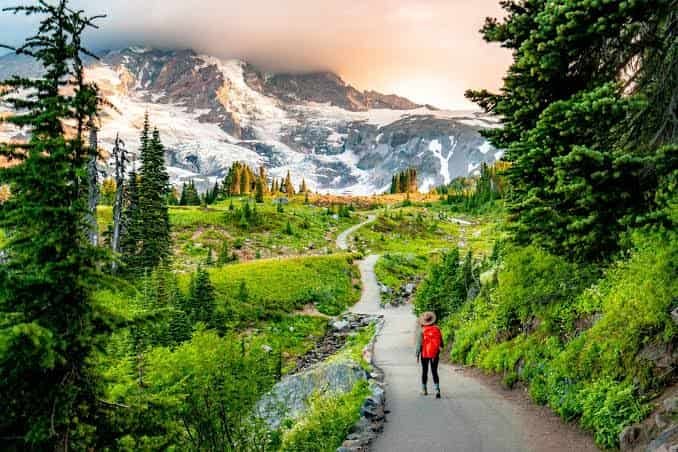
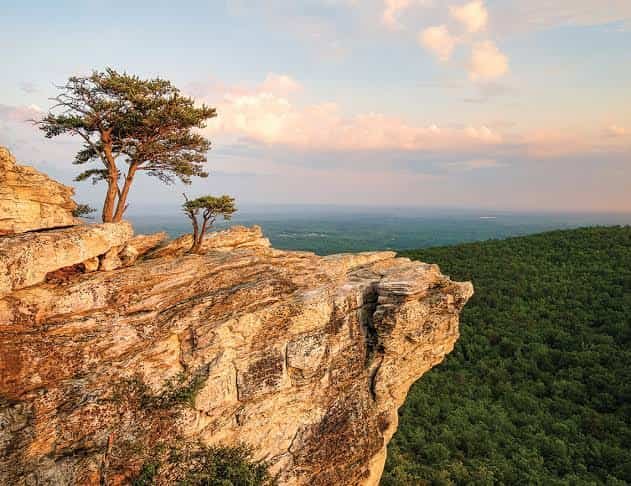
Virginia holds exactly one national park, but it’s one of the most accessible in the entire system for East Coast travelers: Shenandoah, a narrow strip of protected Blue Ridge Mountains barely 75 miles from Washington, D.C. The park’s defining feature, Skyline Drive, runs 105 miles along the mountain crest, capped at a leisurely 35 miles per hour, offering sweeping views without requiring serious backcountry hiking.
Here’s the practical guide to Virginia’s only national park: where it sits, what it costs, the numbers behind its dramatic ridgeline drive, and the difficult history behind clearing this land for public use.
Shenandoah National Park Overview
| Category | Details |
| Location | Northern Blue Ridge Mountains, Virginia |
| Nearest towns | Front Royal, Luray, Waynesboro, Elkton |
| Distance from Washington, D.C. | About 75 miles |
| Nearest airport | Washington Dulles International (IAD) |
| Established | Authorized 1926; fully established December 26, 1935 |
| Total area | About 200,000 acres |
| Vehicle entrance fee | $30, valid 7 consecutive days |
| Shenandoah Annual Pass | $55 |
| Payment method | Cashless at entrance stations since July 2025 |
| Skyline Drive length | 105 miles, four entrances |
| Highest peak | Hawksbill Mountain, 4,051 feet |
| Wilderness designation | Nearly 40% of the park |
Where Shenandoah National Park Is Located
Shenandoah sits in northern Virginia’s Blue Ridge Mountains, close enough to Washington, D.C. that it’s a realistic day trip or weekend escape for much of the mid-Atlantic. The park’s defining feature is its shape: long and narrow, stretching roughly 105 miles from north to south while rarely more than a few miles wide, following the mountain ridgeline the entire way.
Four entrances provide access along Skyline Drive: Front Royal at the northern tip, Thornton Gap and Swift Run Gap in the middle sections, and Rockfish Gap at the southern end, where the road connects to the Blue Ridge Parkway toward the Great Smoky Mountains. Washington Dulles International Airport is the most convenient arrival point for visitors flying in, with Front Royal roughly an hour and a half away by car.
What It Costs to Visit
Entry costs $30 for a private vehicle, covering everyone inside for seven consecutive days. Motorcycles pay $25, and visitors on foot or bicycle pay $15 per person. Regular visitors typically buy the $55 Shenandoah Annual Pass, while those planning trips to multiple national parks during the year tend to prefer the $80 America the Beautiful Pass.
Unlike several nearby high-traffic western parks, Shenandoah is not among the eleven parks currently charging the additional $100 surcharge for non-U.S. residents, so international visitors pay the same entrance fee as U.S. citizens here. One practical note: as of July 2025, Shenandoah’s entrance stations stopped accepting cash entirely, so visitors need a credit or debit card, or can pay online in advance through Recreation.gov.
Facts That Define Shenandoah
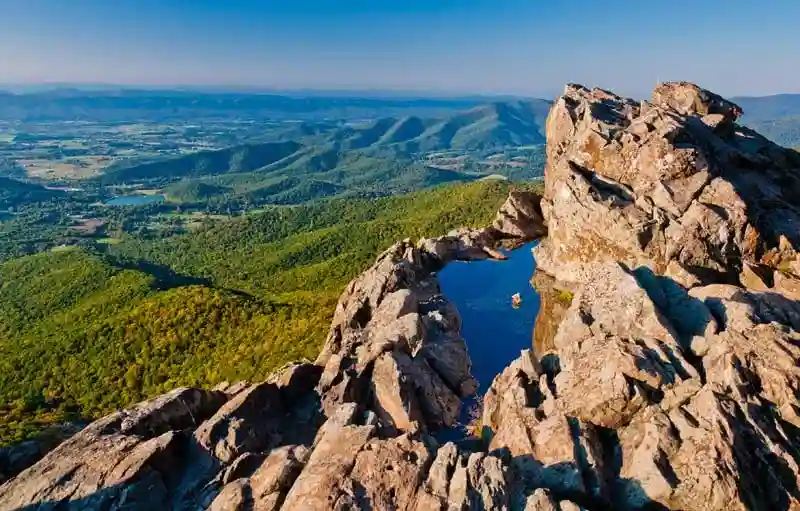
The park’s centerpiece is Skyline Drive, a 105-mile scenic road that traces the crest of the Blue Ridge Mountains and offers views from 75 designated overlooks, alternating between the wide Shenandoah Valley to the west and the Virginia Piedmont’s rolling hills to the east. Hawksbill Mountain, the park’s highest point at 4,051 feet, anchors a landscape shaped by some of the oldest exposed rock in North America, with geological formations dating back roughly 470 million years.
Nearly 40% of the park, close to 80,000 acres, carries official wilderness designation, protecting it permanently from development. More than 500 miles of hiking trails wind through the park, including about 101 miles of the Appalachian Trail, which runs along much of the same ridgeline as Skyline Drive. Wildlife sightings are common and often visible right from the road, with white-tailed deer and black bears frequently spotted near overlooks.
The History Behind Shenandoah National Park
The push to create an eastern national park gained momentum in the 1920s, driven partly by a desire to give Appalachian residents and East Coast visitors a wilderness destination comparable to the western parks. President Calvin Coolidge signed the authorizing legislation on May 22, 1926, but turning that authorization into an actual park took nearly a decade, largely because Virginia had to acquire the land privately before transferring it to the federal government, unlike western parks carved from land the government already controlled.
That acquisition process came at a real human cost. Hundreds of families, estimates range from roughly 400 to 500, were displaced from mountain hollows and small communities within the proposed park boundaries, often through eminent domain proceedings that many later characterized as inadequately compensated. This displacement remains a significant and sometimes painful part of the park’s history.
The federal government formally accepted title to the land on December 26, 1935, officially establishing the park. President Franklin Roosevelt personally dedicated Shenandoah on July 3, 1936, even though Skyline Drive itself wasn’t fully completed until 1939. Much of the road construction, along with early trail work, was carried out by Civilian Conservation Corps crews operating out of six camps established within the park during the Depression era.
Frequently Asked Questions
Q1. Why does Virginia only have one national park?
National park status requires a specific act of Congress, and while Virginia has other historic and natural sites protected under different designations, only Shenandoah carries the full “national park” title, largely a product of the sustained 1920s advocacy for an eastern park comparable to the West.
Q2. Is Skyline Drive open year-round, or does it close in winter?
Sections of Skyline Drive can close temporarily during winter storms due to ice and snow, and some park lodges and campgrounds shut down entirely for the season. Check current road status before a winter trip, since closures can happen with little notice.
Q3. Can I pay the entrance fee with cash if I forgot my card?
No. As of July 2025, Shenandoah’s entrance stations only accept credit or debit cards, or pre-purchased passes through Recreation.gov. Cash still works at in-park restaurants and gift shops, just not at the entrance gates themselves.
Q4. How much of the park can I realistically see in a single day?
Most visitors comfortably cover one section of Skyline Drive, roughly a third of its length, in a single day, including stops at a few overlooks and a moderate hike. Covering the full 105 miles properly usually takes two to three days.