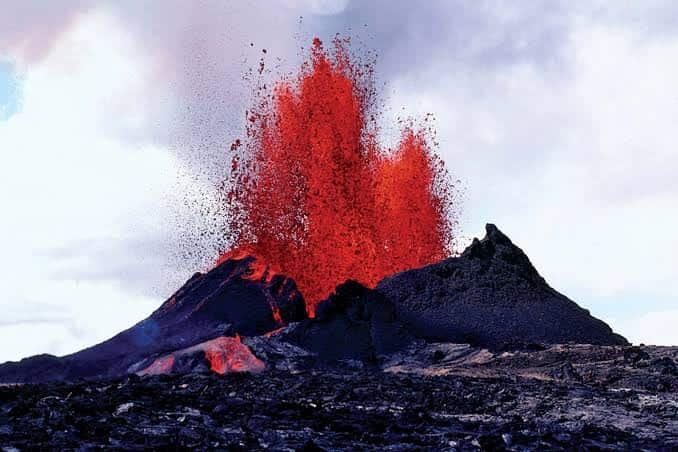
Most national parks show you geology frozen in time, millions of years of erosion or glacial carving finished long before any visitor arrives. Hawaiʻi Volcanoes National Park does something different: it shows geology happening right now. Kīlauea remains one of the most active volcanoes on Earth, and depending on when you visit, you might catch it mid-eruption, lava glowing within its summit crater, or find it quiet between episodes. Either way, this is a landscape still actively being built, one of the only places in the National Park System where the ground itself is a living, ongoing process rather than a finished story.
Here’s the practical guide for anyone planning a visit: where the park sits, what it costs, the numbers behind its two world-record volcanoes, and the century since scientists first pushed to protect this constantly changing corner of the Big Island.
Hawaiʻi Volcanoes National Park Overview
| Category | Details |
| Location | Island of Hawaiʻi (the Big Island), Hawaiʻi County |
| Nearest city | Hilo, HI |
| Nearest airport | Hilo International Airport (ITO) |
| Established | August 1, 1916, as part of Hawaii National Park; separate park since 1961 split |
| Total area | About 354,461 acres |
| Vehicle entrance fee | $30, valid 7 consecutive days |
| Motorcycle fee | $25 |
| Per-person fee (foot/bicycle) | $15 |
| Payment method | Cashless at entrance stations |
| America the Beautiful Annual Pass | $80 (all U.S. national parks) |
| Key volcanoes | Kīlauea (one of the world’s most active) and Mauna Loa (world’s largest shield volcano) |
| UNESCO status | Biosphere Reserve (1980), World Heritage Site (1987) |
| Annual visitation | Over 1.4 million visitors |
Where Hawaiʻi Volcanoes National Park Is Located
Hawaiʻi Volcanoes National Park sits on the island of Hawaiʻi, commonly called the Big Island, roughly 30 miles from Hilo, the closest city of significant size. Hilo International Airport offers the most direct access for visitors flying in, with a straightforward drive to the park entrance along Highway 11.
The park’s two main road systems shape most visits: Crater Rim Drive, an 11-mile loop skirting the edge of the Kīlauea Caldera, and Chain of Craters Road, a dramatic 19-mile descent from the summit down toward the Pacific coastline, passing through stark lava fields along the way. Because Kīlauea remains genuinely active, conditions here shift faster than almost any other national park. Ongoing construction, temporary closures, and changing viewing guidance during active eruption episodes are all realistic possibilities, so checking the park’s current conditions and USGS volcano status updates before finalizing plans is more important here than at most parks.
What It Costs to Visit
A standard vehicle pass costs $30, covering everyone inside for seven consecutive days. Motorcycles pay $25, and visitors on foot or bicycle pay $15 per person. Travelers planning to visit multiple national parks throughout the year typically prefer the $80 America the Beautiful Pass, which covers admission to every federal recreation site nationwide.
Entrance stations here are cashless, requiring a credit or debit card. About 80% of collected entrance fees stay directly within the park, funding trail maintenance, exhibits, and infrastructure repairs, particularly important given how frequently volcanic activity damages roads and viewing areas that then need rebuilding.
Fee-free days waive the entrance charge but don’t cover camping fees or backcountry overnight permits, which remain separate costs regardless of the calendar date.
Facts That Make Hawaiʻi Volcanoes Extraordinary
The park protects two genuinely world-record volcanoes within a single boundary. Mauna Loa stands as the largest volcano on Earth by volume, while Kīlauea ranks among the most consistently active volcanoes anywhere in the world, with eruption activity that has continued, on and off, for the better part of the past century.
Along Chain of Craters Road, visitors have historically been able to watch lava flow directly into the Pacific Ocean during active eruption periods, a genuinely rare spectacle that draws visitors from around the world when conditions allow. The park’s diverse terrain ranges from lush rainforest to stark, barren lava fields and desert-like conditions, all within a relatively compact geographic footprint shaped by centuries of eruptions layering new rock atop old.
In 2018, Kīlauea underwent a major eruption event accompanied by a significant summit collapse, dramatically reshaping the crater and much of the surrounding landscape. New interpretive exhibits near the crater rim now explain these changes to visitors, and the park has continued experiencing episodic eruption activity in the years since, meaning the landscape visitors see today may look meaningfully different from photos taken even a few years ago.
The History Behind Hawaiʻi Volcanoes National Park
Long before any federal designation, Native Hawaiians considered this landscape deeply sacred, with Kīlauea’s Halemaʻumaʻu Crater regarded as the home of Pele, the Hawaiian goddess of volcanoes and fire, a belief that remains culturally significant to many in Hawaiʻi today.
Scientific interest in the region grew substantially in the early 20th century, as geologists and researchers made repeated trips to the Big Island to study the near-constant volcanic activity at Kīlauea and Mauna Loa, returning to mainland universities with reports that helped build the case for federal protection. On August 1, 1916, President Woodrow Wilson signed legislation creating Hawaii National Park, an unusual designation that combined Kīlauea and Mauna Loa on the Big Island with Haleakalā on the separate island of Maui under one shared park, a practical arrangement given how limited federal staffing was in the territory at the time.
A formal dedication ceremony was held at the Kīlauea summit in July 1921, where a Hawaiian minister blessed the occasion and offered thanks to Pele, blending the site’s scientific significance with its deep cultural roots from the very beginning. The two-island arrangement persisted for 45 years until 1961, when Haleakalā was split off into its own separate national park, leaving Hawaiʻi Volcanoes as a standalone unit focused entirely on the Big Island’s volcanic landscape. UNESCO later recognized the park’s global significance, designating it a Biosphere Reserve in 1980 and a full World Heritage Site in 1987, citing both its ongoing volcanism and the rare ecosystems that have adapted to survive on its lava-flow terrain.
Frequently Asked Questions
Q1. How do I find out if Kīlauea is actively erupting before I plan my trip?
Check the USGS Hawaiian Volcano Observatory’s Kīlauea status updates and webcams, along with the National Park Service’s current conditions page, both of which update frequently during active episodes. Conditions can shift within days, so check again close to your actual travel dates.
Q2. Is it safe to visit if the volcano is erupting?
The park manages designated viewing areas specifically to allow safe eruption viewing when conditions permit, though active episodes can bring heavier traffic, limited parking, and temporary trail or road closures. Always follow posted guidance and ranger instructions rather than assuming you know current safe distances.
Q3. What should I prioritize if I only have a half-day to visit?
The Crater Rim Drive loop around Kīlauea Caldera, including overlooks and the Nāhuku (Thurston) Lava Tube, offers the most efficient introduction to the park’s key features without requiring the full drive down Chain of Craters Road.
Q4. Are there fees beyond the entrance charge I should budget for?
Yes, camping and backcountry overnight permits carry their own separate fees not covered by the standard entrance pass or fee-free days. If overnight stays are part of your plan, check current camping and permit costs on the park’s website ahead of time.