According to Hawaiian legend, the demigod Māui once climbed to the summit of this dormant volcano and lassoed the sun itself, releasing it only after it promised to slow its journey across the sky. That story gives the mountain its name: Haleakalā, “house of the sun.” Today it’s still one of the best places in the country to watch daybreak, though getting a spot to see it now requires planning weeks in advance thanks to a strict reservation system protecting a summit that draws crowds well before dawn.
Here’s the practical guide for anyone planning a visit: where the park sits, what it costs, the numbers behind its massive volcanic crater, and how a mountain first protected alongside two entirely different volcanoes on a different Hawaiian island eventually became its own national park.
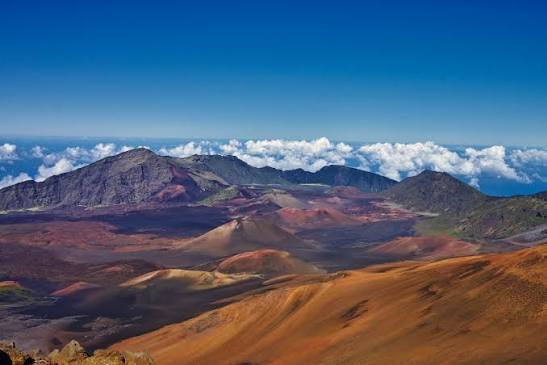
Haleakalā National Park Overview
| Category | Details |
| Location | Island of Maui, Hawaii |
| Districts | Summit District (high-elevation crater) and Kīpahulu District (coastal, near Hāna) |
| Nearest town | Pukalani, HI |
| Nearest airport | Kahului Airport (OGG) |
| Established | Part of Hawaii National Park in 1916; separate national park July 1, 1961 |
| Total area | About 33,265 acres |
| Entrance fee | $30 vehicle / $25 motorcycle / $15 per person, valid 3 days, covers both districts |
| Sunrise reservation | $1 per vehicle, required 3–7 a.m., separate from entrance fee |
| Annual Pass / Hawaiʻi Tri-Park Pass | $55 |
| America the Beautiful Annual Pass | $80 (all U.S. national parks); covers entrance fee, not sunrise reservation |
| Summit elevation | 10,023 feet |
| Crater dimensions | About 7.5 miles long, 2.5 miles wide, up to 3,000 feet deep |
| Annual visitation | Around 850,000 to 1 million visitors |
Where Haleakalā National Park Is Located
Haleakalā National Park sits on the island of Maui, split into two districts that don’t connect by any road inside the park. The Summit District, home to the volcanic crater, sunrise viewing areas, and the Sliding Sands Trail, sits at high elevation near Pukalani. The Kīpahulu District, by contrast, occupies the coastal rainforest near Hāna on Maui’s eastern side, typically visited as part of the famous Road to Hāna drive.
Kahului Airport is the primary arrival point for most visitors, with the Summit District roughly an hour’s drive away and Kīpahulu requiring a considerably longer drive along the winding Hāna Highway. Because the two districts are so far apart and geographically distinct, most visitors treat them as entirely separate day trips rather than attempting to combine both into a single outing.
What It Costs to Visit
A standard vehicle pass costs $30, valid for three days and covering both the Summit and Kīpahulu Districts. Motorcycles pay $25, and visitors on foot or bicycle pay $15 per person. Frequent visitors can pick up the $55 Haleakalā Annual Pass or Hawaiʻi Tri-Park Annual Pass, the latter also covering nearby national parks on other Hawaiian islands, while travelers planning a broader U.S. national park itinerary typically prefer the $80 America the Beautiful Pass.
The detail that catches almost every first-time visitor off guard: seeing sunrise from the summit requires a separate $1 per-vehicle reservation, entirely distinct from the standard entrance fee, for any vehicle entering the Summit District between 3 and 7 a.m. These reservations release 60 days in advance at 7 a.m. Hawaii Standard Time, with a smaller batch of last-minute tickets released 48 hours before each date, and both windows routinely sell out during peak season. Interagency passes, including America the Beautiful, do not cover this $1 sunrise fee, and there’s no first-come, first-served option at the gate.
Entrance stations here are cashless, so a credit or debit card, valid pass, or advance Recreation.gov purchase is required either way.
Facts That Make Haleakalā Extraordinary
Despite its common description as a crater, the summit depression at Haleakalā is technically an erosional valley formed by the merger of two separate valleys, not a true volcanic crater left by an eruption. It stretches roughly 7.5 miles long and 2.5 miles wide, reaching depths of about 3,000 feet, filled with reddish cinder cones and vast fields of dried lava that give the landscape its distinctly lunar appearance.
At 10,023 feet, the summit ranks among Hawaii’s most dramatic viewpoints, and the hike down into the depression via trails like Sliding Sands passes through multiple distinct climate zones within a remarkably short distance, from arid cinder desert near the rim toward greener terrain lower down. The park also holds the distinction of harboring more endangered species than any other national park in the country, including the ʻāhinahina, or Haleakalā silversword, a striking plant found nowhere else on Earth, and the nēnē, Hawaii’s state bird, once extinct on Maui before an unusual 1950s reintroduction effort brought it back.
That reintroduction has its own memorable footnote: Boy Scouts helped carry nēnē geese into the park’s backcountry packed inside old whiskey boxes, part of the effort that restored the species to the island after local extinction.
The History Behind Haleakalā National Park
Native Hawaiians consider Haleakalā a sacred site, tied directly to the legend of the demigod Māui capturing the sun at its summit, and the park continues working with Native Hawaiian communities to protect cultural sites and preserve traditional access to them.
Federal protection began in 1916, when Congress created Hawaii National Park, an unusual multi-island designation combining Haleakalā on Maui with Kīlauea and Mauna Loa on the island of Hawaiʻi, though none of the three received dedicated funding at the time. Haleakalā’s first full-time ranger wasn’t appointed until 1935, and Civilian Conservation Corps crews built the summit roads and cabins still in use today during that same decade, gradually opening the mountain to visitors.
The three volcanoes remained under one shared park designation for 45 years until 1961, when Congress split Haleakalā into its own separate national park, distinct from what became Hawaiʻi Volcanoes National Park on the Big Island. The park’s boundaries expanded significantly afterward: the Kīpahulu Valley was added in 1951, and the pools of ʻOheʻo Gulch followed in 1969, when the Nature Conservancy purchased roughly 10,000 acres of fragile coastal ecosystem and transferred it to the National Park Service for permanent protection. Haleakalā received International Biosphere Reserve designation in 1980, recognizing both its geological and ecological significance.
Frequently Asked Questions
Q1. Do I need a sunrise reservation if I’m just visiting during the day?
No. The $1 sunrise reservation is only required for vehicles entering the Summit District between 3 and 7 a.m. Daytime visits outside that window need only the standard entrance pass, no sunrise reservation required.
Q2. How far in advance should I book a sunrise reservation, and how competitive is it?
Book as close to the 60-day advance window opening as possible, since popular dates routinely sell out. A smaller batch releases 48 hours before each date if you miss the initial window, but demand for that batch is also high during peak travel season.
Q3. Can I combine a Summit District sunrise visit with the Kīpahulu District on the same day?
It’s technically possible but exhausting, since the districts don’t connect within the park and require a lengthy drive between them. Most visitors treat Summit sunrise mornings and Kīpahulu coastal exploration as separate day trips rather than combining both.
Q4. How cold does it actually get at the summit, and what should I bring?
Temperatures at 10,023 feet typically run 30 to 40 degrees colder than sea level, often near or below freezing before sunrise even during summer. Bring warm layers, a windbreaker, hat, and gloves regardless of how hot it is down at the coast.