Costa Rica protects roughly 29 national parks within its national park system, part of a broader conservation network (SINAC) that covers more than a quarter of the country’s total land area, an extraordinary commitment for a nation smaller than West Virginia. From active volcanoes to the most biodiverse rainforest in the Americas to the Western Hemisphere’s most important sea turtle nesting beach, these parks are a major reason Costa Rica became one of the world’s most recognized ecotourism destinations.
Here’s the practical guide for U.S. travelers: where the major parks sit, what they cost, the reservation quirks that trip up first-time visitors, and how this small country built one of the most extensive protected-land systems on Earth.
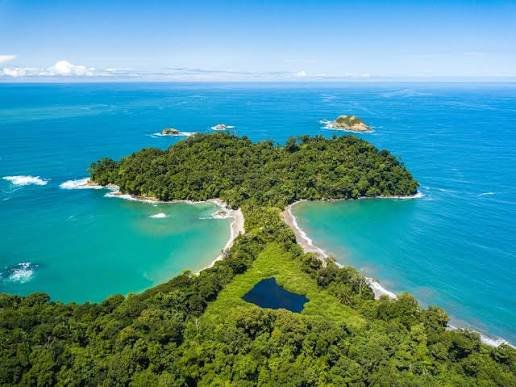
Costa Rica’s Major National Parks Overview
| Park | Region | International Adult Fee | Reservation Required | Signature Feature |
| Corcovado | Osa Peninsula, south Pacific | ~$15–20/day | Yes, plus mandatory certified guide | Most biodiverse forest in the Americas |
| Manuel Antonio | Central Pacific coast | ~$18–20 | Yes | Beaches, sloths, all four Costa Rican monkey species |
| Arenal Volcano | Northern lowlands | ~$15 | No (pay at gate) | Iconic conical volcano |
| Poás Volcano | Central highlands | ~$15 | Yes | Active crater lake, accessible viewpoint |
| Tortuguero | Caribbean coast | ~$15 | Varies by sector | Green sea turtle nesting beach |
| Rincón de la Vieja | Guanacaste | ~$15 | Some sectors | Active volcano, mud pots, hot springs |
| Chirripó | Talamanca mountains | ~$18–24 (with station fee) | Yes | Costa Rica’s highest peak |
| Cahuita | Caribbean coast | ~$5–12 | No | Coral reef, coastal jungle |
Where Costa Rica’s National Parks Are Located
Costa Rica’s parks cluster into distinct regions that most travelers use to plan multi-stop itineraries rather than crisscrossing the country. Guanacaste in the northwest holds Rincón de la Vieja and the Guanacaste and Santa Rosa parks, known for their volcanoes and dry tropical forest. The central highlands hold Arenal, Poás, and Monteverde’s cloud forest reserves. The central Pacific coast holds Manuel Antonio and Marino Ballena, both easily reached from San José within a few hours. The Osa Peninsula in the deep south holds Corcovado, the country’s most remote and biodiverse park, while the Caribbean side holds Tortuguero and Cahuita, both requiring boat or coastal road access.
Juan Santamaría International Airport near San José serves as the main gateway for nearly all park regions, with most parks reachable within two to six hours by car or domestic flight depending on the destination.
What Costa Rica’s National Parks Cost to Visit
Entrance fees for international visitors typically range from about $5 at smaller or less-developed parks to roughly $20 at the most popular destinations, with Manuel Antonio and Corcovado sitting at the higher end. Fees are charged per person, per day, quoted before Costa Rica’s 13% tax, so the actual cost at checkout runs slightly higher than the sticker price. Costa Rican citizens and Central American residents pay significantly reduced rates, and children under 6 generally enter free.
The most important logistical detail: several marquee parks, including Manuel Antonio, Corcovado, Poás, and Chirripó, require advance online booking through SINAC’s official reservation system rather than paying at the gate, and popular dates during peak season (December through April) can sell out weeks ahead. Other parks, including Arenal and Cahuita, accept walk-up visitors with card-only payment at the entrance, since cash isn’t accepted at most gates. There’s no multi-park pass in the system; each visit requires its own separate entrance fee.
Facts That Make Costa Rica’s Parks Extraordinary
Corcovado protects what many biologists consider the most biodiverse tract of forest anywhere in the Americas, and it’s the only major park in the country requiring a certified guide for entry, both for safety in genuinely wild terrain with jaguars and venomous snakes, and to maximize the chances of spotting wildlife most visitors would otherwise walk right past. Tortuguero protects the most important Atlantic green sea turtle nesting beach in the Western Hemisphere, with peak nesting occurring from July through October.
Manuel Antonio, despite being the smallest park in the system, is one of the few places on Earth to spot all four of Costa Rica’s monkey species in a single location. Arenal’s near-perfect conical volcano shape has made it the country’s most photographed natural landmark, even though it’s been in a resting phase since its last major eruptive period ended. Chirripó holds Costa Rica’s highest peak, and reaching its summit requires an overnight stay at a mountain lodge given the demanding multi-day hike involved.
The History Behind Costa Rica’s National Park System
Costa Rica’s conservation movement gained real momentum in the 1960s and 1970s, driven by growing alarm over rapid deforestation that had already stripped much of the country’s original forest cover for agriculture and cattle ranching. Santa Rosa National Park, established in 1971, became one of the earliest formal protections, built around the historic site of an 1856 battle against American filibuster William Walker’s forces, blending natural conservation with national historical identity from the start.
Corcovado followed in 1975, protecting the Osa Peninsula’s rainforest after biologists identified it as one of the most species-rich areas on the planet. Throughout the following decades, Costa Rica steadily expanded its protected areas, eventually consolidating management under SINAC, the National System of Conservation Areas, which now oversees roughly 29 national parks alongside numerous wildlife refuges and biological reserves. This sustained, decades-long investment in conservation, unusual for a developing nation at the time, became the foundation of Costa Rica’s global reputation for ecotourism and helped the country reverse its deforestation trend more dramatically than almost anywhere else in the world.
Frequently Asked Questions
Q1. Which Costa Rica national parks require booking tickets online in advance?
Manuel Antonio, Corcovado, Poás, and Chirripó are the parks to watch, along with some sectors of Rincón de la Vieja and Santa Rosa. Book through SINAC’s official site weeks ahead during peak season, December through April, since these parks enforce daily visitor limits.
Q2. Can I use one entrance ticket to visit multiple parks on the same trip?
No, there’s no multi-park pass in the Costa Rican system. Each park requires its own separate entrance fee per visit, even if you’re touring several parks within the same week.
Q3. Do I need a guide for every national park, or just Corcovado?
Corcovado is the only major park with a mandatory certified-guide requirement for entry. Other parks like Arenal, Manuel Antonio, and Cahuita allow independent exploration, though hiring a guide is still recommended for spotting wildlife more effectively.
Q4. How many days should I budget to see a good cross-section of Costa Rica’s parks?
Most first-time visitors find 8 to 10 days ideal for combining a volcano, a cloud forest, and coastal parks without spending the whole trip in transit. A tighter 6 to 7 day trip is possible if you group parks by region rather than crisscrossing the country.