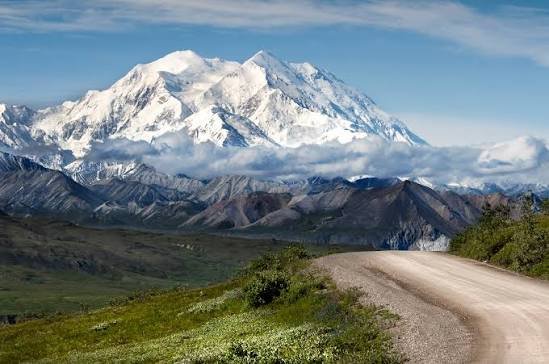
North America’s tallest mountain has changed its official name twice in the past decade, a reminder that even geography can get caught up in politics. Whatever name currently appears on federal maps, Alaska’s Indigenous Koyukon Athabascan people have called this 20,310-foot peak “Denali,” meaning “the tall one,” for far longer than any government designation has existed, and the national park surrounding it has kept that name since 1980 regardless of what the mountain itself is currently called.
Here’s the practical guide for planning a visit: where the park sits, what it costs, the numbers behind its staggering six-million-acre scale, and the century of naming disputes and landslide-driven road closures shaping how visitors experience it today.
Denali National Park Overview
| Category | Details |
| Location | Interior Alaska, between Anchorage and Fairbanks |
| Nearest town | Healy, AK |
| Distance from Anchorage | About 237 highway miles |
| Nearest airport | Ted Stevens Anchorage International (ANC) |
| Established | February 26, 1917 (as Mount McKinley National Park); renamed and expanded in 1980 |
| Total area | About 6 million acres (park and preserve combined) |
| Per-person entrance fee | $15, included automatically in narrated tour bus tickets |
| Denali Annual Pass | $45, covers up to four adults |
| America the Beautiful Annual Pass | $80 (all U.S. national parks), covers the entrance fee |
| Peak elevation | 20,310 feet — tallest mountain in North America |
| Park Road length | 92 miles, currently only drivable/bus-accessible to Mile 43 |
| Peak visibility | Fully visible only about 30% of the time |
| Annual visitation | Around 400,000 to 600,000 visitors |
Where Denali National Park Is Located
Denali sits deep in Alaska’s interior, roughly 237 highway miles north of Anchorage and about 124 miles south of Fairbanks along the Parks Highway. There’s a single main entrance and one road into the park, the 92-mile Park Road, which makes trip planning here fundamentally different from parks with multiple entry points.
Most visitors fly into Ted Stevens Anchorage International Airport and either drive or take the train north, with the small town of Healy serving as the closest gateway community offering lodging and services near the park entrance.
One critical planning detail affects nearly every visitor right now: due to accelerating landslide activity known as the Pretty Rocks landslide, first identified in 2021, the Park Road has been closed to vehicle, pedestrian, and bicycle traffic west of the East Fork Bridge at roughly Mile 43. The National Park Service has been constructing a new steel suspension bridge to bypass the unstable ground, with reopening expected around the 2027 summer season, though timelines for infrastructure projects like this can shift. This closure currently prevents access to popular western destinations including the Eielson Visitor Center, Wonder Lake, and Kantishna.
What It Costs to Visit
Denali charges a $15 per-person entrance fee, a different structure than the vehicle-based fees common at most national parks, since private vehicle access is restricted beyond Mile 15 of the Park Road anyway. Narrated tour bus tickets include this fee automatically in the adult ticket price, while transit (shuttle) bus tickets do not, meaning transit riders pay the $15 fee separately when picking up tickets at the Denali Bus Depot.
Frequent visitors can pick up the $45 Denali Annual Pass, which covers up to four adults, while the $80 America the Beautiful Pass also covers the entrance fee and makes sense for anyone visiting multiple national parks during a broader Alaska trip. If you already hold an annual or lifetime pass and purchased a narrated tour ticket that included the fee, you can request a refund in person at the Denali Bus Depot with your pass, photo ID, and reservation information.
Beyond basic entry, most of what people book at Denali falls into a separate category: guided bus tours like the Tundra Wilderness Tour (around $144 for adults) or Natural History Tour, plus premium add-ons like flightseeing trips or helicopter glacier landings, none of which are included in the basic entrance fee.
Facts That Capture Denali’s Scale
At 20,310 feet, the mountain at the heart of this park stands as the tallest peak in North America, rising more than three and a half vertical miles from its base near 2,000 feet elevation. Despite its dramatic height, the peak is only fully visible to visitors roughly 30% of the time, since Alaska’s interior weather frequently shrouds it in clouds.
The park and preserve combined span roughly 6 million acres, an area larger than the state of New Hampshire, protecting ecosystems ranging from boreal taiga forest to alpine tundra and permanent glaciers. More than 1,500 plant species and 37 mammal species live within its boundaries, including grizzly bears, wolves, moose, caribou, and Dall sheep, the very animal whose protection originally justified the park’s creation.
Federal wildlife-viewing rules require visitors to stay at least 300 yards from bears and 25 yards from all other wildlife, restrictions enforced partly because transit and tour buses remain the primary and safest way most visitors encounter the park’s animals across open tundra.
The History Behind Denali National Park
Conservationist Charles Sheldon first proposed protecting this landscape in 1906, driven primarily by concern for the region’s Dall sheep population rather than the mountain itself. After years of advocacy, Sheldon’s efforts culminated when President Woodrow Wilson signed legislation establishing Mount McKinley National Park on February 26, 1917, just one year after the National Park Service itself was created, protecting an initial 2.15 million acres.
The mountain’s name carries its own long and contested history. Alaska’s Indigenous peoples, particularly the Koyukon Athabascan, had called the peak Denali for generations before a gold prospector named it Mount McKinley in 1896, honoring the presidential candidate of the moment. That name became federally official in 1917. The State of Alaska formally petitioned to restore the name Denali in 1975, but the effort stalled in Congress for decades due to opposition from Ohio lawmakers representing McKinley’s home state. In 2015, Interior Secretary Sally Jewell used administrative authority to officially rename the mountain Denali at the federal level. In January 2025, President Donald Trump signed an executive order reverting the mountain’s federal name back to Mount McKinley, though the surrounding national park has retained the name Denali National Park and Preserve throughout.
Regardless of the mountain’s naming history, the park itself was designated an International Biosphere Reserve in 1976, and in 1980, the Alaska National Interest Lands Conservation Act tripled its size to roughly 6 million acres, renaming it Denali National Park and Preserve and adding the National Preserve component specifically to buffer wildlife habitat surrounding the original protected core.
Frequently Asked Questions
Q1. Can I drive my own vehicle into the park?
Only as far as Mile 15 of the Park Road. Beyond that point, private vehicle access is restricted, and visitors rely on transit or narrated tour buses to travel further into the park, partly to limit environmental impact and partly due to the current road closure at Mile 43.
Q2. How does the Pretty Rocks landslide closure affect my trip right now?
It significantly limits access to the park’s western half, including Eielson Visitor Center and Wonder Lake, since the road remains closed beyond roughly Mile 43 while a replacement bridge is under construction. Check current NPS alerts before finalizing plans, since reopening timelines for infrastructure projects can shift.
Q3. What’s the difference between a transit bus and a narrated tour bus?
Transit buses are cheaper, unguided shuttle rides primarily meant for campers and backcountry hikers reaching trailheads, while narrated tour buses include a guide who provides wildlife and geology commentary throughout, at a significantly higher price point.
Q4. What’s the best time of year to actually see the mountain and active wildlife?
Late May through mid-September marks the official summer season with full visitor services, though September specifically offers thinner crowds and increased bear activity as they feed heavily before winter, making it a strong window for wildlife viewing alongside decent mountain visibility odds.