You cannot drive to Isle Royale. There’s no bridge, no causeway, and no road network anywhere on the island. Reaching this remote Lake Superior archipelago means a multi-hour ferry crossing or a seaplane flight, and once you arrive, you’ll find no cars, no cell service in most areas, and the longest continuous predator-prey study in the world unfolding quietly in the forests around you. It’s consistently among the least-visited national parks in the entire lower 48, and that isolation is precisely the point.
Here’s the practical guide for anyone planning a visit: where the park sits, what it costs, the numbers behind its unusual wolf and moose ecosystem, and the decades-long scientific study that’s made this island one of the most closely watched wilderness laboratories on Earth.
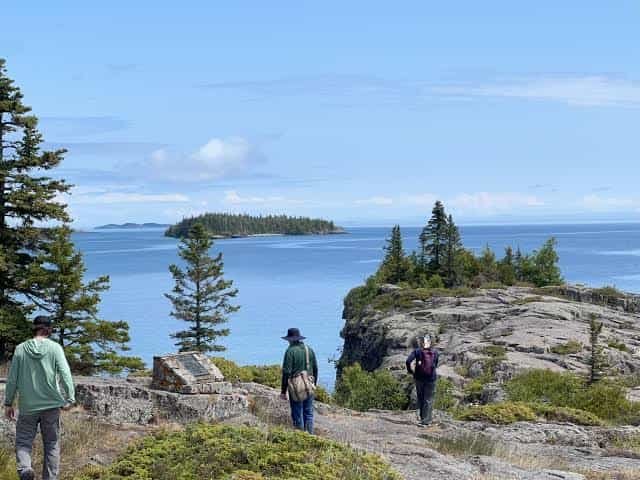
Isle Royale National Park Overview
| Category | Details |
| Location | Northwestern Lake Superior, Michigan |
| Nearest city | Houghton, MI (park headquarters) |
| Ferry departure points | Houghton, MI; Copper Harbor, MI; Grand Portage, MN |
| Established | Authorized 1931; established April 3, 1940 |
| Total area | About 571,790 acres (including surrounding waters) |
| Entrance fee | $7 per person, per day (children 15 and under free) |
| Isle Royale Season Pass | $60, covers up to 4 people, valid April 16–October 31 |
| America the Beautiful Annual Pass | $80 (all U.S. national parks) |
| Payment method | Cashless — credit/debit card only |
| Season | Open April 16 through October 31; closed November 1–April 15 |
| Wilderness designation | Nearly 99% of the island |
| Annual visitation | Around 18,000 to 29,000 visitors — one of the least-visited parks in the country |
Where Isle Royale National Park Is Located
Isle Royale sits in the northwestern reaches of Lake Superior, closer to the Canadian shore than to most of Michigan, the state that actually governs it. The island itself stretches roughly 45 miles long and up to 9 miles wide, making it the largest island in Lake Superior, surrounded by more than 400 smaller islands and the waters extending up to 4.5 miles beyond the outermost land.
Park headquarters sits in Houghton, Michigan, on the mainland, and reaching the island itself requires a boat or seaplane. The Ranger III ferry departs from Houghton, the Queen IV runs from Copper Harbor, and the Voyageur II departs from Grand Portage, Minnesota, each offering a different route and crossing time. Isle Royale Seaplanes also operates flights from Hancock, Michigan and Grand Marais, Minnesota, cutting the trip to roughly 45 minutes, though flights depend heavily on weather and cost significantly more than the ferry options.
The park operates on a strict seasonal schedule, open from April 16 through October 31 and completely closed the rest of the year, since ferry and seaplane service doesn’t run during Lake Superior’s harsh winter months.
What It Costs to Visit
Isle Royale charges $7 per person, per day, rather than the flat vehicle fee used at most national parks, since there are no vehicles or roads here to begin with. Children 15 and under enter free. Frequent visitors can pick up the Isle Royale Season Pass for $60, covering the pass holder plus up to three additional adults for the entire April 16 through October 31 season, while anyone visiting multiple national parks throughout the year typically prefers the $80 America the Beautiful Pass.
As of 2026, entrance fees must be paid by credit or debit card only, since cash is no longer accepted at fee stations. Note that visiting park headquarters in Houghton itself, on the mainland, doesn’t require any fee; the charge only applies once you’re actually on the island.
Backcountry camping requires a free permit, obtained upon arrival at Rock Harbor or Windigo ranger stations or from the Ranger III’s captain, and it covers your entire stay rather than functioning as a formal reservation. Larger groups of 7 to 10 people need a separate group camping permit in advance, which does carry a $25 fee.
Facts That Make Isle Royale Ecologically Unique
Isle Royale is home to the longest-running predator-prey study in the world, tracking the relationship between the island’s wolf and moose populations since researchers began annual winter observations in 1958. Neither species is native to the island; moose likely swam across or were introduced by humans for hunting purposes decades before wolves arrived by crossing an ice bridge from the mainland in the late 1940s.
That predator-prey balance has swung dramatically over the decades, with the wolf population ranging from roughly 50 animals down to as few as two individuals at its lowest point. When the population collapsed to that critical level, the National Park Service began actively relocating gray wolves from the Great Lakes region and Canada to the island starting in the fall of 2018, a deliberate restoration effort to rebuild a functioning predator population. That management work continues today; in 2025, the park implemented new regulations requiring all overnight visitors to carry IGBC-certified animal-resistant food containers, following an incident involving escalating wolf-human conflicts.
Notably, Isle Royale has no bears, raccoons, or possums, a rarity among wilderness areas this size, largely a product of the island’s isolation limiting which species could ever naturally establish populations here in the first place.
The History Behind Isle Royale National Park
Long before any federal designation, the island saw prehistoric copper mining, along with later commercial logging, hunting, fishing, and trapping activity through the early 20th century. President Herbert Hoover pushed for the island’s protection as “a prime example of North Woods Wilderness,” and Congress authorized Isle Royale National Park on March 3, 1931.
It took nearly a decade to actually assemble the necessary land from private owners and the state of Michigan before the park could be formally established. President Franklin D. Roosevelt signed the park into existence on April 3, 1940, protecting the island’s wilderness character going forward. In 1976, Congress designated nearly 99% of Isle Royale as federally protected wilderness under the National Wilderness Preservation System, and researcher Durward Allen of Purdue University began the long-term wolf-moose study that same era, a research project that continues to this day and remains one of the most cited ecological studies in the world.
Frequently Asked Questions
Q1. Do I need a reservation for the ferry, or can I just show up?
Advance ferry reservations are strongly recommended, since sailings are limited and can sell out, especially during peak summer weekends. Check the Ranger III, Queen IV, or Voyageur II schedules well ahead of your planned trip dates.
Q2. Is Isle Royale open year-round, or does it close for winter?
It closes completely from November 1 through April 15 each year, since ferry and seaplane transportation doesn’t operate during Lake Superior’s winter conditions. The park only reopens for the season on April 16.
Q3. Do I need to bring my own food, or are there stores on the island?
You need to be fully self-sufficient. There are no stores, restaurants, or resupply points in the backcountry, so campers must carry all necessary food and supplies for their entire stay, along with the now-required IGBC-certified animal-resistant food container.
Q4. Can I bring my dog or other pet to Isle Royale?
No, pets aren’t allowed anywhere on the island or on boats within park boundaries, due to concerns about the island’s native wildlife. The only exception is ADA-certified service animals, which require advance clearance from the Park Service before your trip.