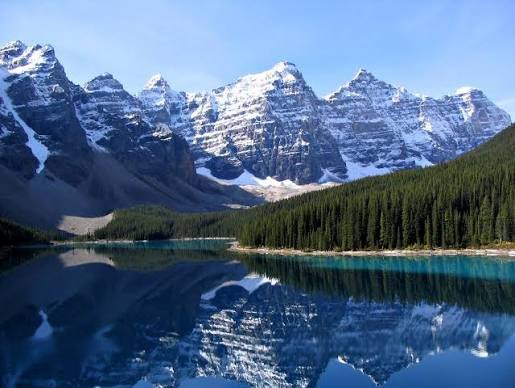
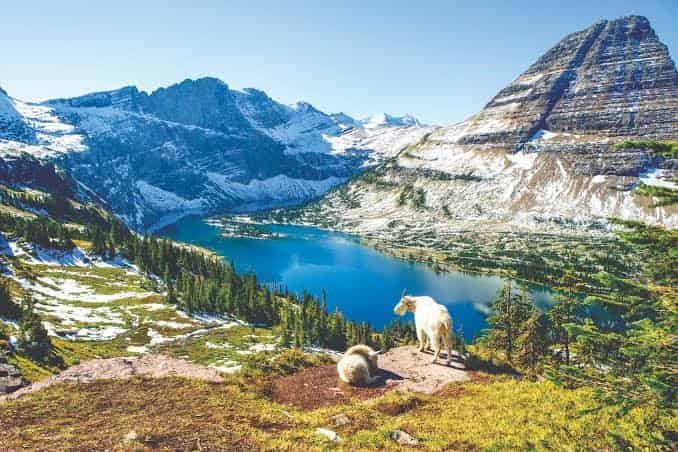
Montana is home to one fully-contained national park, Glacier, along with a small sliver of Yellowstone that technically crosses into the state’s southern border. For most practical purposes, when people talk about “Montana’s national park,” they mean Glacier: 1,583 square miles of jagged peaks, more than 700 lakes, and glacially fed rivers running turquoise from suspended rock flour, all packed into the northern Rockies along the Canadian border.
Here’s the practical guide to Montana’s national park landscape: where it sits, what it costs, the numbers behind its dramatic terrain, and the century-long history that turned a threatened wilderness into one of the crown jewels of the National Park System.
Montana’s National Parks Overview
| Park | Location | Established | Entrance Fee | Signature Feature |
| Glacier | Northwest Montana, Canadian border | May 11, 1910 | $35 per vehicle (7 days, summer) | Going-to-the-Sun Road, ~25 remaining glaciers |
| Yellowstone (partial) | Primarily Wyoming; 3% extends into Montana | March 1, 1872 | $35 per vehicle (7 days) | Geysers, hydrothermal features |
Where Glacier National Park Is Located
Glacier National Park sits in northwest Montana, bordering Alberta and British Columbia, where it connects directly with Canada’s Waterton Lakes National Park to form Waterton-Glacier International Peace Park. Kalispell, Montana serves as the nearest city of size, roughly an hour from the West Glacier entrance, with Glacier Park International Airport offering the most convenient regional access.
The park is split roughly down the middle by the Continental Divide, and the Going-to-the-Sun Road ties both halves together, climbing to Logan Pass at nearly 6,600 feet before descending the other side. That road is seasonal, typically staying closed until late May or June due to heavy snowpack, sometimes later depending on the year.
What It Costs to Visit
A standard Glacier vehicle pass costs $35 during peak season, valid for seven consecutive days. Motorcycles pay $25 to $30 depending on the season, and visitors on foot or bicycle pay a reduced per-person rate. Frequent visitors can pick up the $70 Glacier Annual Pass, while anyone planning trips to multiple national parks throughout the year typically prefers the $80 America the Beautiful Pass.
Starting in 2026, non-U.S. residents pay an additional $100 surcharge per person at Glacier, one of eleven parks nationwide currently applying that policy, unless they hold a qualifying non-resident annual pass. During peak summer season, driving the alpine section of Going-to-the-Sun Road often requires a separate vehicle reservation on top of the standard entrance pass, so checking current requirements before finalizing a route is worthwhile since the system has changed from year to year.
Facts That Make Glacier Extraordinary
Glacier covers just over 1 million acres and holds 762 named lakes, though only around 131 are officially designated, along with roughly 25 remaining glaciers, down from more than 100 a century ago as climate change has accelerated their retreat. The Going-to-the-Sun Road climbs to 8,512 feet at its highest point, making it one of the most dramatic mountain drives in the country and a defining feature of any visit.
The park’s international character was formalized in 1932 when it merged symbolically with Canada’s Waterton Lakes to form the world’s first International Peace Park, a gesture of goodwill between the two nations. Both parks received UNESCO World Heritage Site status in 1995, cementing Glacier’s place among the most ecologically significant protected areas on the planet, and wildlife here includes healthy populations of grizzly bears, mountain goats, and one of the last strongholds for certain native trout species affected by the park’s warming waters.
The History Behind Glacier National Park
Long before Glacier existed as a park, the Blackfeet people used the mountains in the east and the Flathead, or Salish and Kootenai, peoples used the west side for spiritual practice, calling the range the “Backbone of the World.” Pressure from westward expansion led the Blackfeet to cede roughly 800,000 acres of mountainous treaty land to the U.S. government in 1895, land that later became part of the park boundary.
Conservationist George Bird Grinnell spent nearly two decades advocating for federal protection before Congress finally acted. On May 11, 1910, President William Howard Taft signed the bill making Glacier the country’s tenth national park. The Great Northern Railway, eager to bring tourists west, subsequently built a string of grand hotels and rustic chalets throughout the park, several of which, including Many Glacier Hotel and Lake McDonald Lodge, still stand today. The park’s international designation followed in 1932, and UNESCO World Heritage Site status came in 1995.
Frequently Asked Questions
Q1. Does Yellowstone count as a Montana national park too, since part of it crosses the border?
Technically yes, a small sliver, about 3%, of Yellowstone extends into Montana, but the park is administratively and popularly associated with Wyoming, where roughly 96% of its land sits. Most “Montana national park” references specifically mean Glacier.
Q2. Do I need a vehicle reservation to drive Going-to-the-Sun Road in summer?
It depends on the year; the park has run varying reservation systems for the alpine section during peak season in recent years, so check Glacier’s current official requirements before your trip rather than assuming based on a prior visit.
Q3. What’s the best time of year to visit Glacier if I want the full road open?
Mid-July through early September offers the most reliable full access to Going-to-the-Sun Road, since the road typically doesn’t clear completely from snow until sometime between late June and mid-July depending on that year’s snowpack.
Q4. Is it possible to combine a Glacier trip with Canada’s Waterton Lakes National Park?
Yes, the two parks connect directly and share the International Peace Park designation, making a combined visit straightforward for travelers with a valid passport, though separate entrance fees apply on each side of the border.