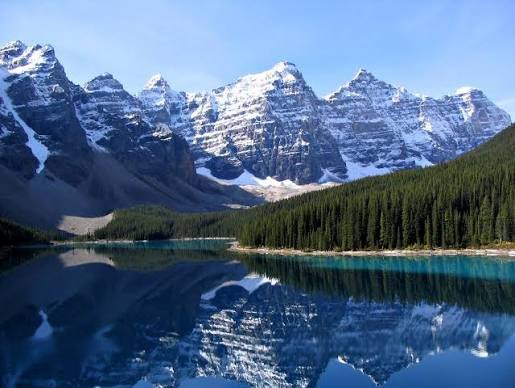
Michigan holds exactly one national park, and it’s one of the most remote in the entire lower 48: Isle Royale, a roadless island archipelago in the middle of Lake Superior that’s home to the longest-running predator-prey study in the world. It’s also one of the least-visited national parks in the country, not because it isn’t worth seeing, but because getting there requires a multi-hour ferry crossing or a seaplane, and the park closes completely for half the year.
Here’s the practical guide to Michigan’s only national park: where it sits, what it costs, the numbers behind its unusual wolf-and-moose ecosystem, and how it came to be protected despite decades of logging and mining pressure.
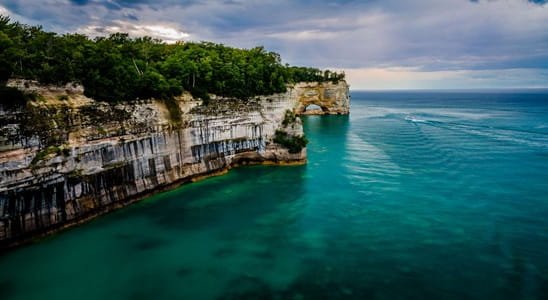
Isle Royale National Park Overview
| Category | Details |
| Location | Northwestern Lake Superior, Michigan |
| Nearest mainland city | Houghton, MI (park headquarters) |
| Ferry departure points | Houghton, MI; Copper Harbor, MI; Grand Portage, MN |
| Established | Authorized 1931; established April 3, 1940 |
| Total area | About 571,790 acres (including surrounding waters) |
| Entrance fee | $7 per person, per day (children 15 and under free) |
| Isle Royale Season Pass | $60, covers up to 4 people, valid April 16–October 31 |
| Season | Open April 16 through October 31 only |
| Wilderness designation | About 99% of the island |
| Annual visitation | Around 18,000 to 29,000 visitors — among the least-visited parks in the lower 48 |
Where Isle Royale National Park Is Located
Isle Royale sits in the northwestern reaches of Lake Superior, closer to the Canadian shoreline than to the rest of Michigan, the state that governs it. The island itself stretches roughly 45 miles long, making it the largest island in Lake Superior, surrounded by more than 400 smaller islands.
Park headquarters sits on the mainland in Houghton, Michigan, and reaching the island requires a ferry or seaplane. The Ranger III departs from Houghton, the Queen IV from Copper Harbor, and the Voyageur II from Grand Portage, Minnesota, each offering a different crossing time and route. Isle Royale Seaplanes also flies from Hancock, Michigan and Grand Marais, Minnesota, cutting travel time to roughly 45 minutes, though at a considerably higher cost than the ferries.
What It Costs to Visit
Isle Royale charges $7 per person, per day, rather than a flat vehicle fee, since there are no roads or vehicles on the island at all. Children 15 and under enter free. Frequent visitors can purchase the Isle Royale Season Pass for $60, covering the pass holder plus up to three additional adults for the entire operating season from April 16 through October 31.
The park is entirely cashless, so entrance fees must be paid by credit or debit card. Backcountry camping requires a free permit obtained upon arrival, covering your entire stay rather than functioning as a per-night reservation, though larger groups of 7 to 10 people need a separate $25 group permit booked in advance.
Facts That Make Isle Royale Unique
Isle Royale is home to the longest-running predator-prey study in the world, tracking the island’s wolf and moose populations continuously since 1958. Neither species is native to the island; moose likely swam across or were introduced by hunters, while wolves arrived by crossing an ice bridge from the mainland in the late 1940s. That population has swung dramatically over the decades, dropping as low as two wolves at one point before the National Park Service began actively relocating wolves from the Great Lakes region and Canada starting in 2018 to rebuild a functioning predator population.
The park operates on a strict seasonal schedule, closing completely from November 1 through April 15 each year since ferry and seaplane service can’t operate safely during Lake Superior’s winter conditions. Notably, Isle Royale has no bears, raccoons, or possums, a rarity for a wilderness area this size, largely because the island’s isolation limited which species could ever naturally establish themselves there.
The History Behind Isle Royale National Park
Long before federal protection, the island saw prehistoric copper mining, along with later commercial logging, hunting, fishing, and trapping activity well into the early 20th century. President Herbert Hoover pushed for the island’s protection as “a prime example of North Woods Wilderness,” and Congress authorized Isle Royale National Park on March 3, 1931. It took nearly a decade to assemble the necessary land from private owners and the state of Michigan before the park could be formally established.
President Franklin D. Roosevelt signed the park into existence on April 3, 1940. In 1976, Congress designated nearly 99% of Isle Royale as federally protected wilderness, and researcher Durward Allen of Purdue University began the long-term wolf-moose study that same era, a project that continues today and remains one of the most cited ecological research efforts in the world.
Frequently Asked Questions
Q1. Why does Michigan only have one national park when neighboring states have several?
National park status depends on Congress choosing to designate a specific site, not simply on a state’s size or number of scenic areas. Michigan has other National Park Service units, including national lakeshores like Sleeping Bear Dunes, but only Isle Royale carries the full “national park” designation.
Q2. Is Isle Royale open year-round, or does it close for winter?
It closes completely from November 1 through April 15 each year, since ferry and seaplane transportation doesn’t operate during Lake Superior’s harsh winter conditions. The park only reopens for the season on April 16.
Q3. Do I need a reservation for the ferry, or can I just show up and buy a ticket?
Advance ferry reservations are strongly recommended, since sailings are limited and can sell out, especially during peak summer weekends. Check the Ranger III, Queen IV, or Voyageur II schedules well ahead of your planned trip dates.
Q4. Can I bring my dog to Isle Royale?
No, pets aren’t allowed anywhere on the island or on boats within park boundaries, due to concerns about the island’s native wildlife. The only exception is ADA-certified service animals, which require advance clearance from the Park Service before your trip.