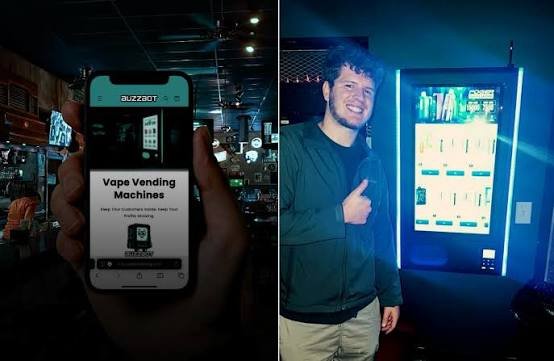
Are vape vending machines legal? In the United States, yes, but only under tight conditions. Federal rules allow vape products to be sold from a vending machine only inside facilities where no one under 21 is allowed to enter at any time, and state and local laws add licensing, product, and location requirements on top of that. In practice, that means vape vending machines are most often found in age-restricted venues such as bars, nightclubs, and casinos, usually with built-in ID checks. This overview is general information, not legal advice, and a licensed attorney in your state can speak to a specific situation.
The Federal Rules in Plain Terms
Vapes and other electronic nicotine products are regulated by the Food and Drug Administration as tobacco products. Three federal rules matter most for vending machines.
- Minimum age of 21: the federal Tobacco 21 law sets 21 as the minimum age to buy any tobacco product, including e-cigarettes and e-liquids, in every state
- Adult-only facilities for vending: FDA regulations restrict vending machine sales of these products to locations where the retailer can ensure that no person under 21 is present or permitted to enter at any time
- Product authorization: e-cigarette products generally need FDA marketing authorization to be sold legally, and the agency has authorized only a limited set so far
These federal rules are the starting point. States and cities can, and often do, set stricter limits.
What “Adult-Only” Really Means
The adult-only requirement is the one most vending operators focus on, because it controls where a machine can go.
- The space must be restricted to people 21 and older for all hours, including when the business is closed
- A bar, nightclub, casino, or private lounge with strict age policies commonly fits
- A convenience store, gas station, mall, restaurant that admits families, or a lobby open to the public generally does not
- A separate, controlled room within a larger business can qualify if it is truly closed off to anyone under 21
- Placing a machine in view of minors or in a general-access area is a compliance problem even if the machine checks ID
Location is where most vending compliance questions are decided, which is why careful site selection matters.
Age Verification Technology
Federal and state rules both stress preventing sales to minors, and modern vending machines use technology to help.
- ID scanners: the machine reads a driver’s license or state ID and confirms age before unlocking
- Facial matching: some units compare the person’s face to the ID photo to reduce borrowed ID use
- Staff supervision: some states and cities require an attendant or staff member to be able to see the machine
- Locked or remote activation: some machines release products only after an employee or system approval
Many state and local rules treat strong age verification as an expectation, and operators who use it show good faith compliance.
State and Local Rules
State laws vary widely, and local governments can add their own restrictions.
- Licensing: many states require a tobacco or vapor retail permit, sometimes a separate one for each machine
- Registration and fees: some states charge an annual per-machine fee
- Signage: many require a warning sign stating that sales to people under 21 are prohibited
- Adult-only placement: states commonly mirror or tighten the federal rule on where machines may sit
- Outright limits: some states and cities heavily restrict or prohibit tobacco vending machines, or ban them even in adult venues
- Flavor and product rules: several states restrict flavored vapes or require products to appear on an approved list, which can affect what a machine is allowed to hold
- Taxes: many states tax vapor products, and operators are responsible for collecting and remitting them
Because rules differ by state and sometimes by city or county, checking with the state revenue or health department, and the local city office, is an important first step.
Which Products Can Go in a Machine
Even in a location where a machine is allowed, inventory matters.
- Products generally need to be legal to sell in that state
- FDA authorization status is an important consideration, and states are increasingly publishing directories of approved products
- Packaging and labeling must follow federal warning requirements
- Products must not be mixed with non-tobacco items in some states
- Nicotine strength, flavor, and device type may be regulated locally
Operators who stay current on these lists avoid having to pull stock later.
A Compliance Checklist for Business Owners
For anyone thinking of placing or operating a machine, a simple checklist keeps the process organized.
- Confirm the host venue is truly 21+ at all hours
- Check state and local rules, including whether machines are allowed at all
- Obtain the required retailer or vending permits and display them
- Choose a machine with reliable government ID verification
- Post required warning signs in plain view
- Stock only products that are legal to sell in your state
- Keep records of purchases, taxes, and maintenance
- Train venue staff on how the machine works and what to do if there is a problem
- Review rules periodically, since vaping laws change often
A Note for Consumers
For shoppers, a few simple points help.
- Expect to show a valid ID that proves you are 21 or older
- Legal machines are typically located in clearly age-restricted venues
- A machine in an open public space that does not check ID may not be compliant
- Buying from licensed sellers helps you get properly labeled products
- Vaping products contain nicotine, which is addictive, so anyone who wants help cutting back can talk with a doctor or call 1-800-QUIT-NOW
Why the Rules Exist
The restrictions are rooted in a straightforward goal: keeping nicotine products away from young people while still allowing adults to buy them lawfully. Vending machines are unattended, so regulators put extra safeguards around them. Operators who follow location and verification rules support that goal and protect their businesses from penalties.
Frequently Asked Questions
Q1. Are vape vending machines legal in the United States?
Yes, but only in locations where no one under 21 is allowed, and subject to state and local rules.
Q2. Where can a vape vending machine be placed?
Typically in age-restricted venues such as bars, nightclubs, casinos, and private lounges.
Q3. Do vape vending machines check ID?
Most legal machines use ID scanning, and some add facial matching to verify age.
Q4. Do I need a license to operate one?
In most states, yes. A tobacco or vapor retail permit is commonly required, sometimes for each machine.