El Capitan rises 3,600 feet straight up from the valley floor, a single slab of granite so sheer that climbers spend days on its face, sleeping in hammocks bolted to the rock. A few miles away, Yosemite Falls drops nearly half a mile in one continuous plunge, making it one of the tallest waterfalls on the continent. Ansel Adams spent decades photographing this place in black and white and never seemed to run out of new angles. That’s the strange gravity Yosemite has — a park small enough to explore in a long weekend, yet vast enough that people build entire careers around documenting it.
Here’s the practical breakdown for anyone planning a visit: where the park sits, what it costs, the essential facts, and the century-and-a-half of history that shaped it.
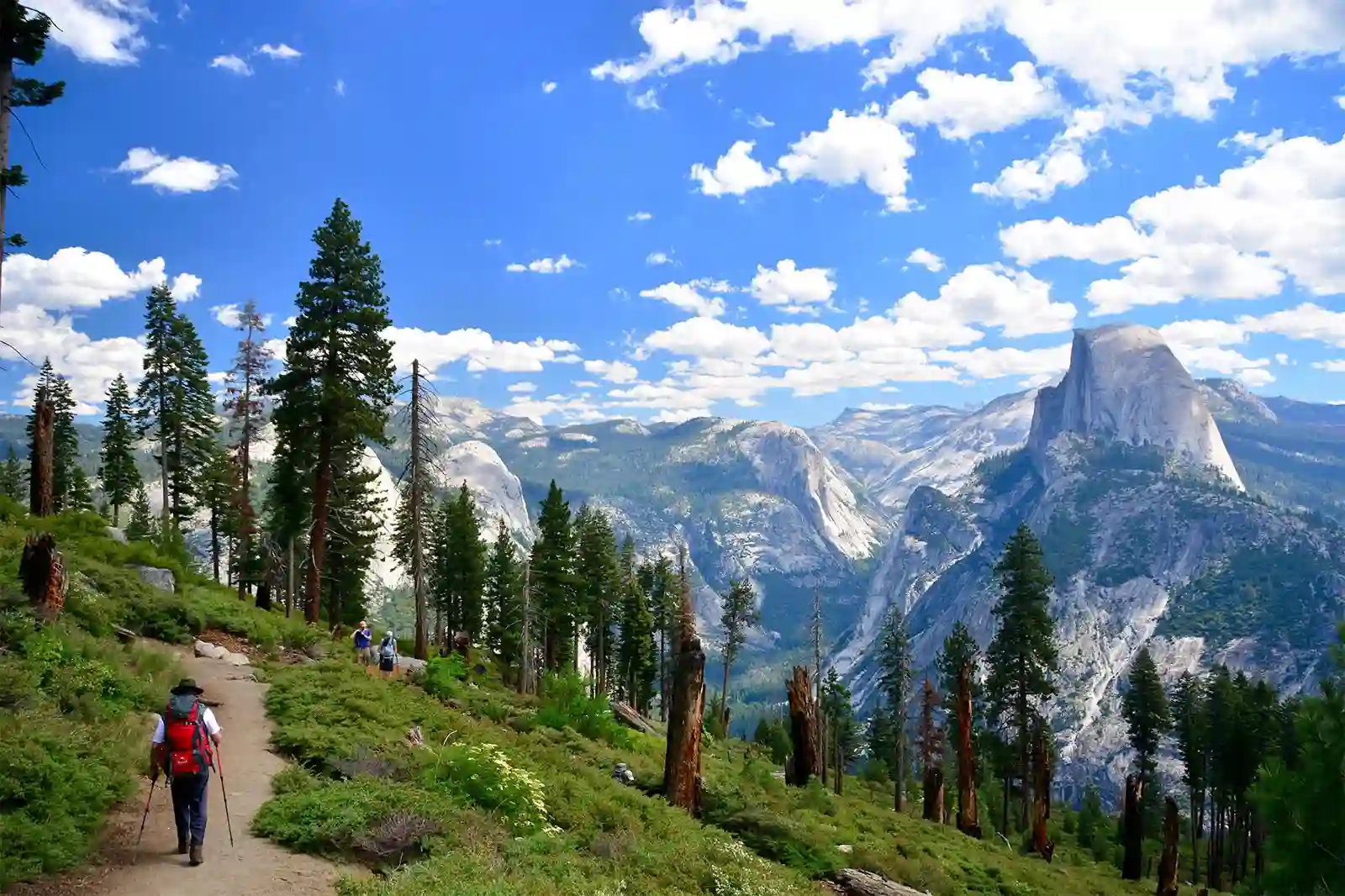
Yosemite National Park Overview
| Category | Details |
| Location | Sierra Nevada mountains, east-central California |
| Counties | Tuolumne, Mariposa, Mono, and Madera |
| Nearest city | Mariposa, CA |
| Distance from major cities | ~140 miles from San Francisco, ~300 miles from Los Angeles |
| Nearest airports | Fresno Yosemite International (FAT), Mammoth Yosemite Airport (MMH) |
| Established | October 1, 1890 — America’s third national park |
| Total area | About 748,500 acres (roughly 1,169 square miles) |
| Vehicle entrance fee | $35, valid 7 consecutive days |
| Motorcycle fee | $30 |
| Per-person fee (foot/bicycle) | $20 |
| Yosemite Annual Pass | $70 |
| America the Beautiful Annual Pass | $80 (all U.S. national parks) |
| International visitor surcharge (2026) | $100 per person, age 16+ (waived with qualifying annual pass) |
| Entrance reservation | Not required in 2026 for driving in |
| Tallest waterfall | Yosemite Falls, 2,425 feet total drop |
| Iconic landmarks | El Capitan, Half Dome, Glacier Point, Mariposa Grove |
| UNESCO status | World Heritage Site since 1984 |
| Annual visitation | Around 4 million visitors |
Where Yosemite Sits and How to Get There
Yosemite occupies the western slope of the Sierra Nevada in east-central California, roughly a three-hour drive from San Francisco and closer to five from Los Angeles depending on traffic and the season. Four counties touch the park boundary — Tuolumne, Mariposa, Mono, and Madera — though most first-time visitors head straight for Yosemite Valley, the seven-mile stretch that holds the park’s most photographed landmarks.
There are four main entrances: Big Oak Flat and Arch Rock on the west side, South Entrance near Wawona and the Mariposa Grove of giant sequoias, and Tioga Pass on the east, which only opens seasonally once snow clears from the high country, usually late spring through October. If you’re flying in, Fresno Yosemite International is the closest major airport to the south entrance, while Mammoth Yosemite Airport serves the eastern side near Tioga Pass.
One planning note that trips up a lot of visitors: driving from the Bay Area to Yosemite Valley can look deceptively short on a map but eat up half a day once you factor in the mountain roads. Give yourself more time than GPS estimates suggest, especially in winter.
Ticket Prices and Entrance Fees
Getting into Yosemite works the same way as most major national parks. A standard vehicle pass costs $35 and covers everyone in the car for seven consecutive days. Motorcycles run $30, and visitors arriving on foot or bicycle pay $20 per person.
If you’re a frequent visitor, the $70 Yosemite Annual Pass pays for itself after two trips. Travelers planning to see multiple parks in the same year tend to prefer the $80 America the Beautiful Pass, which covers entry to every federal recreation site in the country for twelve months.
The biggest change for 2026 affects international visitors specifically. As of January 1, anyone who isn’t a U.S. resident and is 16 or older pays an additional $100 surcharge on top of the standard entrance fee — meaning a solo international traveler entering by vehicle could pay well over $100 just to get in. The way around this is the $250 non-resident annual pass, which covers the pass holder plus up to three passengers in the same vehicle and waives the per-person surcharge entirely. For a family or small group, that pass often works out cheaper than paying the surcharge individually at the gate.
The good news for spontaneous trip planners: unlike recent years, Yosemite does not require a separate entrance reservation to drive into the park in 2026. The $35 vehicle fee is still the only requirement for entry, though lodging and campground reservations remain necessary if you’re staying overnight.
Facts That Explain Why Yosemite Matters
Yosemite covers roughly 748,500 acres, and 94% of that land is designated wilderness, meaning it’s protected from development and largely left to nature. The park sits within the ancestral homeland of seven associated tribes, a history that predates any state or federal designation by thousands of years.
Some of the geology here is almost unbelievable once you know the numbers. El Capitan towers 3,600 feet above the valley floor as one of the largest exposed granite monoliths on Earth. Half Dome, the park’s most recognizable silhouette, was carved by glaciers that scraped through the valley over millions of years. Yosemite Falls, at 2,425 feet total, ranks among the five tallest waterfalls in the world, though it often slows to a trickle by late summer once snowmelt tapers off.
The park was designated a UNESCO World Heritage Site in 1984, recognition of both its geological rarity and its outsized role in shaping the entire concept of American conservation.
A Short History of Yosemite National Park
Long before conservationists entered the picture, the Ahwahneechee people had lived in Yosemite Valley for thousands of years. That changed abruptly during the California Gold Rush, when conflict with incoming miners and state militia led to the displacement of Native communities from the valley in the early 1850s.
Word of Yosemite’s scenery spread fast once photographers and painters started bringing images east. By 1864, public pressure convinced President Abraham Lincoln to sign a law protecting Yosemite Valley and the Mariposa Grove of giant sequoias, making it the first piece of land in American history set aside specifically for preservation and public use. That predates Yellowstone’s national park designation by eight years, though the protected area at the time was managed by California, not the federal government.
The naturalist John Muir pushed the effort further. Concerned that unregulated sheep grazing was destroying the high meadows surrounding the valley, Muir and magazine editor Robert Underwood Johnson lobbied Congress to protect the broader wilderness. On October 1, 1890, Congress established Yosemite as the nation’s third national park. It took until 1906 for California to cede the valley and grove to federal jurisdiction, unifying the whole park under one authority.
Muir later guided President Theodore Roosevelt on a camping trip near Glacier Point, a trip credited with cementing federal support for expanding the park’s boundaries. The National Park Service formally took over management in 1916, and the following year, Clare Marie Hodges became the first female park ranger in the United States, stationed right here in Yosemite.
Frequently Asked Questions
Q1. Do I still need a reservation to enter Yosemite in 2026?
No. Unlike the pandemic-era system and the years immediately after, Yosemite does not currently require a separate entrance reservation for driving into the park. The standard $35 vehicle fee is all that’s needed for entry.
Q2. When does Tioga Pass open, and does it affect my route?
Tioga Pass typically opens sometime between late May and July, depending on snowpack, and closes again by late October or November. If you’re planning to enter from the east side, always check current road status before finalizing your route.
Q3. Is Half Dome accessible without a permit?
Hiking to the base is permit-free, but climbing the final cable section to the summit requires a separate permit, issued through a lottery system during peak season. Attempting it without one can result in being turned away by rangers.
Q4. What’s the most cost-effective way for a family of international visitors to enter?
Given the new $100 per-person surcharge, a family of four would pay $400 extra at the standard rate. The $250 non-resident annual pass covers the pass holder plus three passengers, making it the cheaper option for most families visiting more than once or traveling as a group.