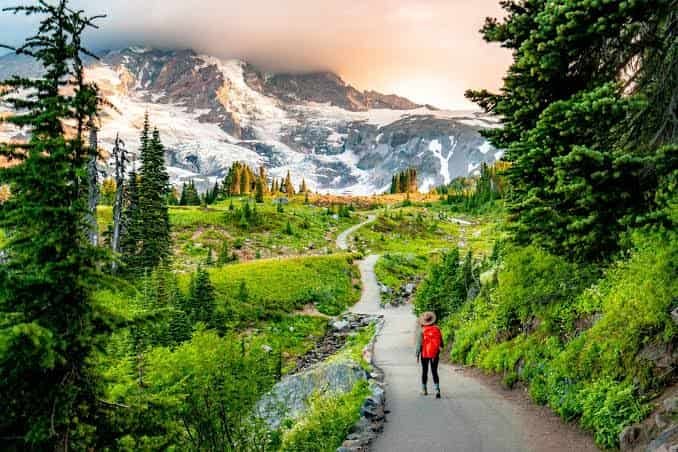
Washington holds three national parks, each protecting a completely different corner of the Pacific Northwest. Mount Rainier dominates the skyline south of Seattle with the most heavily glaciated peak in the contiguous United States. Olympic packs three distinct ecosystems, temperate rainforest, alpine mountains, and wild Pacific coastline, into one park with no interior road connecting them. North Cascades, meanwhile, remains one of the least-visited parks in the entire lower 48 despite holding more glaciers than anywhere outside Alaska.
Here’s the practical guide to all three: where they sit, what they cost, the numbers that define them, and the very different paths each took toward federal protection.
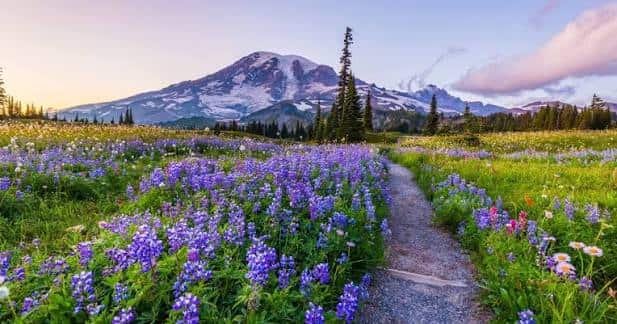
Washington’s National Parks Overview
| Park | Location | Established | Entrance Fee | Signature Feature |
| Mount Rainier | West-central WA, Cascade Range | 1899 | $30 per vehicle (7 days) | 14,410-foot active volcano, 25 named glaciers |
| Olympic | Olympic Peninsula, northwestern WA | 1938 | $30 per vehicle (7 days) | Rainforest, alpine peaks, and coastline in one park |
| North Cascades | Northern WA, near Canadian border | 1968 | None — free to enter | Over 300 glaciers, “the American Alps” |
Where Washington’s National Parks Are Located
Mount Rainier sits roughly 65 to 68 miles southeast of Seattle, making it a manageable day trip or weekend visit, with Seattle-Tacoma International Airport offering the most practical air access. Olympic National Park sits on the Olympic Peninsula in northwestern Washington, with Port Angeles serving as the main gateway on the park’s north side, generally requiring a drive around Puget Sound or a ferry crossing from Seattle. North Cascades sits close to the Canadian border in northern Washington, spanning Whatcom, Skagit, and Chelan counties, with Sedro-Woolley as the nearest town offering services.
Because these three parks spread across such different parts of the state, visiting all three in one trip requires serious driving time and planning, though Mount Rainier and North Cascades sit within a comparable few hours of Seattle if time allows for a broader loop.
What Washington’s National Parks Cost to Visit
Mount Rainier and Olympic both charge $30 per vehicle for a standard seven-day pass during peak season, with reduced rates for motorcycles and individuals arriving on foot or bicycle. North Cascades National Park charges no entrance fee at all, one of the more financially accessible parks in the entire system, though the adjacent Ross Lake and Lake Chelan National Recreation Areas within the same complex may charge separately for camping or boat launches.
For anyone visiting Mount Rainier and Olympic together, or combining a Washington trip with parks elsewhere, the $80 America the Beautiful Annual Pass covers both fee-charging parks and typically pays for itself after just two or three visits. None of Washington’s three parks currently charge the additional $100 international visitor surcharge applied at select high-traffic parks in other states.
Facts That Distinguish Washington’s Three Parks
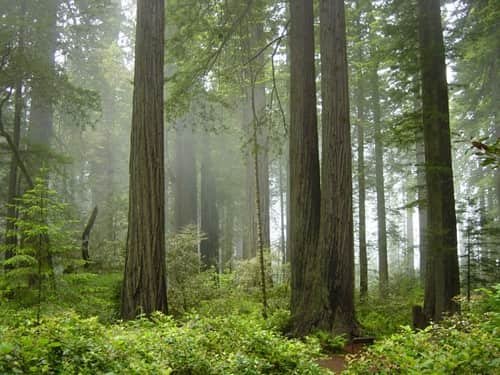
Mount Rainier stands as the tallest peak in the Cascade Range at 14,410 feet and carries 25 named glaciers, more than any other peak in the contiguous United States, feeding five major river systems across the Pacific Northwest. Olympic protects three genuinely distinct ecosystems within a single boundary: temperate rainforest in valleys like the Hoh, alpine terrain at Hurricane Ridge, and more than 70 miles of wild, undeveloped Pacific coastline, the longest such stretch in the contiguous U.S. Because no interior road connects these regions, most visitors pick just one or two areas to focus on per trip.
North Cascades holds more than 300 glaciers within its boundaries, more than any national park outside Alaska, giving Diablo Lake and the Skagit River their striking turquoise and milky-blue color from suspended glacial rock flour. Despite that density of ice and dramatic peaks, earning it the nickname “the American Alps,” the park draws remarkably few visitors, largely a matter of visibility rather than accessibility, since it sits within a comparable drive from Seattle as Mount Rainier.
The History Behind Washington’s National Parks
Mount Rainier has the longest history of the three, established in 1899 as the fifth national park in the country after a lobbying effort that took six separate congressional sessions to succeed, ultimately winning support once surveys confirmed the mountain held no valuable mineral or agricultural resources worth exploiting. Olympic followed decades later, protected first as a national monument in 1909 to safeguard Roosevelt elk habitat, before President Franklin Roosevelt signed it into full national park status in 1938 over continued objections from logging interests eager to access the peninsula’s timber.
North Cascades has the most recent origin of the three and one of the more unusual: an early 1906 proposal for a park failed after local residents sided with mining interests over conservation. The push finally succeeded in 1968, when President Lyndon Johnson signed legislation creating North Cascades National Park alongside the adjacent Ross Lake and Lake Chelan National Recreation Areas, a compromise structure that balanced strict wilderness protection with continued recreational use of existing lakes and hydroelectric infrastructure.
Frequently Asked Questions
Q1. Which Washington national park is best for a first-time visitor with only one day?
Mount Rainier offers the most developed infrastructure and iconic scenery reachable within a single day trip from Seattle, particularly the Paradise area, making it the most practical choice for visitors short on time.
Q2. Can I drive between Olympic’s rainforest, coast, and mountain areas in one day?
Not comfortably. Because no interior road connects Olympic’s distinct regions, moving between the Hoh Rain Forest, Hurricane Ridge, and the coastal strip each requires driving around the park’s perimeter, so most visitors dedicate a full day to just one area at a time.
Q3. Why does North Cascades charge no entrance fee while the other two do?
Fee policy is set independently for each park based on infrastructure needs and visitation levels; North Cascades has historically drawn far fewer visitors than Mount Rainier or Olympic, and its fee-free status has simply persisted as part of its management approach.
Q4. Is it possible to visit all three Washington national parks in a single road trip?
Yes, though it requires at least a week to avoid feeling rushed, since the three parks sit in different corners of the state. A common route loops from Seattle to Mount Rainier, north to North Cascades, then west to Olympic via ferry or the Seattle area.