Is eating while driving legal? In every state, the answer is generally yes: no state has a law that bans eating behind the wheel outright, and there is no federal rule against it either. The catch is that police can still stop a driver whose snack leads to weaving, slow reactions, or an unsafe moment, because distracted driving, careless driving, and reckless driving laws apply to behavior, not to a specific activity. In other words, a sandwich is legal until the way you handle it makes the drive unsafe. This overview is general information, not legal advice, and local rules vary, so your state’s DMV or highway patrol website has the final word.
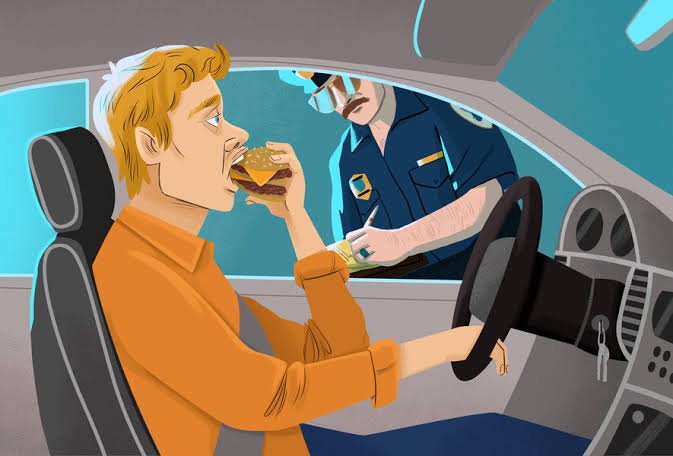
Why There Is No Direct Ban
Lawmakers have written specific rules for the most dangerous distractions, such as handheld phones and texting, because those are easy to define and measure. Eating is harder to regulate precisely. A sip of water, a handful of almonds, a bite of a granola bar, and a messy burger all count as “eating,” yet they carry very different levels of distraction. Rather than listing every food, most states rely on broader laws that focus on whether the driver is paying full attention and keeping control of the vehicle.
That approach leaves everyday habits legal while giving officers a way to address behavior that puts people at risk.
The Laws That Can Still Apply
Several kinds of traffic laws can come into play when food gets in the way of safe driving.
- Distracted driving statutes: some states have broad language covering any activity that takes a driver’s attention from the road, and officers can apply it to eating, grooming, or reaching for objects
- Careless or negligent driving laws: these cover driving without reasonable care, such as drifting out of a lane or braking late while distracted
- Reckless driving laws: reserved for willful or serious disregard for safety, they involve far more severe behavior than a casual snack
- Failure to maintain a lane or control the vehicle: a driver who crosses a line while unwrapping lunch may be cited under these rules
- Following too closely or failure to yield: both can follow from a split-second lapse in attention
Several states, Maine being one example, have broad distracted driving provisions that officers can use for a wide range of activities. Penalties usually involve a fine and sometimes points on a driving record, and the amount depends on the state and the specific violation.
What the Safety Research Suggests
Eating while driving is common, and most people do it without incident, but safety researchers still treat it as a meaningful distraction because it combines three kinds of attention loss at once.
- Visual: eyes drop to the food, wrapper, or cup
- Manual: at least one hand leaves the steering wheel
- Cognitive: attention shifts to the meal, a spill, or a dropping item
Distracted driving contributes to thousands of deaths in the United States each year, according to national traffic safety data. Activities that take both eyes and hands away from the task, even briefly, raise the odds of a mistake. At 55 mph, a car travels about 80 feet every second, so a two-second glance at a burger covers the length of half a football field with no one watching the road.
The good news is that small adjustments dramatically reduce the risk.
Foods and Drinks That Make Driving Easier
Choosing the right snack can make a drive far safer and cleaner. Think of items that are neutral in texture, low-mess, and easy to eat with one hand without looking.
- Bite-size snacks such as nuts, grapes, and crackers
- Granola bars or protein bars that unwrap easily
- Bananas and other peel-and-eat fruits
- Drinks with secure lids and straws, placed in a cup holder rather than your lap
- Pre-cut vegetables or cheese sticks in a small container
On the other hand, foods that tend to cause trouble include:
- Soups, chili, and anything served in a bowl
- Salads that require a fork
- Burgers, tacos, and sandwiches with drippy sauces
- Hot coffee in flimsy cups
- Foods that crumble, such as flaky pastries or chips
A good rule of thumb: if it needs two hands, a plate, or a napkin tucked into your collar, it belongs at a table.
Smart Habits for Eating on the Road
Many drivers eat in the car because schedules are tight, and a few simple habits keep the drive smooth.
- Eat before you go: a quick meal at home or the office removes the temptation
- Prepare snacks in advance: open packages and portion food before putting the car in drive
- Use a cup holder or console tray: keep food within easy reach so you never glance down or stretch
- Pull over for real meals: a rest area, parking lot, or scenic stop takes a few minutes and gives you a chance to stretch
- Let a passenger help: a front-seat companion can hand over food, open wrappers, and handle spills
- Wait for a safe moment: eat during a straight, quiet stretch rather than in heavy traffic, construction, or bad weather
Drive-thru orders are best placed in the passenger seat or a stable holder until you are parked or at a very calm stopping point.
Rules for Commercial Drivers and Rideshare Work
Professional drivers spend long hours on the road, and many follow stricter workplace expectations than general traffic law requires.
- Federal motor carrier safety rules focus mainly on handheld phones and texting, and employers often add their own policies about eating or other distractions
- Trucking and delivery companies frequently encourage scheduled breaks at truck stops and rest areas
- Rideshare and taxi drivers often follow company standards on keeping the car clean and attention on the road, particularly when passengers are aboard
Anyone driving for work benefits from checking their employer’s policy, since a company rule can be stricter than the state law.
Teen and New Drivers
Newer drivers are still building the automatic habits that experienced drivers take for granted, so distractions can have a bigger effect. Families often find it helpful to set simple ground rules.
- Eat before getting in the car, and keep snacks for breaks
- Keep the car free of loose wrappers and drinks that can roll under pedals
- Agree that the phone stays out of reach and that navigation is set before departure
- Practice pulling over safely when hungry or thirsty on longer trips
Many state graduated licensing programs also limit passengers and nighttime driving for new drivers, which helps cut down on distractions in the first year.
Keeping the Car Clean and Safe
A tidy car is a safer car. Loose containers, rolling bottles, and crumbs on the floor can slide under pedals, and spills on the seat can lead to sudden, distracting reactions.
- Keep a small trash bag or bin in the car
- Store napkins and wipes in the glove box or door pocket
- Choose a spill-resistant travel mug for hot drinks
- Buckle in or secure bags and containers so they do not slide
- Clean up spills after you park, not while moving
What to Do If Food Causes a Close Call
A dropped item or a sudden spill happens to everyone eventually. The safest response is simple.
- Keep both eyes on the road and let the item fall
- Hold the wheel with both hands and keep your lane
- Slow down gradually if you need to
- Pull into a safe spot like a parking lot or shoulder before retrieving anything
- Hot drinks that spill should be handled the same way: control the car first, deal with the mess later
A few seconds of patience is always better than reaching under the seat at highway speed.
Frequently Asked Questions
Q1. Can you get a ticket for eating while driving?
A: Not for eating itself, but an officer can cite you for careless driving, failure to maintain a lane, or distracted driving if food causes unsafe behavior.
Q2. Is drinking coffee while driving legal?
A: Yes, in all states. The same attention rules apply, so use a secure lid and cup holder to keep both hands free for driving.
Q3. Does eating while driving affect car insurance?
A: A crash blamed on distraction can affect fault decisions and future premiums, so keeping your focus on the road helps protect your record.
Q4. Is it illegal to eat while driving a commercial vehicle?
A: Federal rules do not ban it, but many employers have their own policies on eating, so check your company’s guidelines.