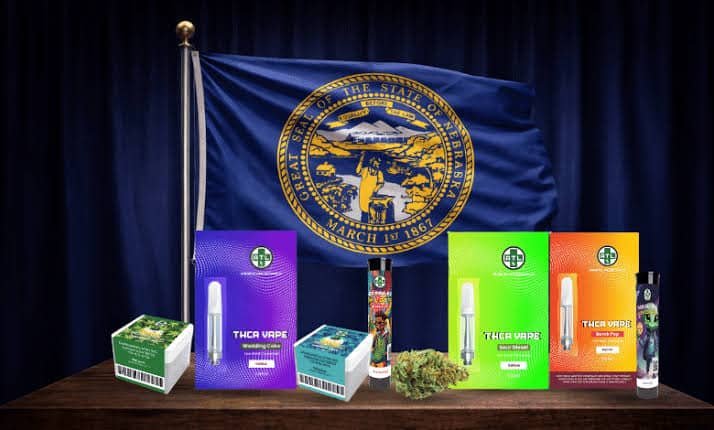
Is THCA legal in Nebraska? The honest answer is that it sits in a legal gray area and is about to get more restricted. Hemp-derived THCA flower has been sold across the state because federal law currently measures hemp by delta-9 THC alone, but Nebraska officials have taken a firm view against intoxicating hemp products, and a federal change set for November 12, 2026 will redefine hemp by total THC and make most THCA flower ineligible. Because THCA turns into psychoactive THC when heated, a product can look legal on paper and still be treated as marijuana by police and prosecutors. This overview is general information, not legal advice, and a Nebraska attorney can speak to your specific situation.
What THCA Is and Why It Causes Confusion
THCA, short for tetrahydrocannabinolic acid, is the raw, non-intoxicating compound found in fresh cannabis and hemp plants. It changes into delta-9 THC, the compound that causes a high, when it is heated by smoking, vaping, or cooking, through a process called decarboxylation.
That chemistry is the source of the legal debate.
- On the lab report: a flower can show very low delta-9 THC and a high THCA percentage
- After heating: the THCA converts, and the effect can resemble regulated cannabis
- Under older testing: only delta-9 was counted, so many THCA flowers passed as hemp
- Under newer testing: total THC counts THCA too, using a conversion formula, so the same flower can fail
Two products can come from the same plant and be treated very differently depending on which measurement the law uses.
The Federal Picture Today
Under the 2018 Farm Bill, hemp is defined as cannabis with no more than 0.3% delta-9 THC by dry weight, and hemp-derived products meeting that standard are not federally controlled. THCA flower that stayed under that delta-9 line has been widely sold on that basis.
Congress changed the rules in November 2025. A provision in the continuing appropriations law redefines hemp to count total THC, including THCA, and generally excludes finished products with more than 0.4 milligrams of total THC per container. That change takes effect on November 12, 2026, only weeks away. Lawmakers have also discussed follow-up bills that could adjust the standard, so the final picture may continue to evolve.
The practical effect expected from the new definition is that high-THCA flower and most potent intoxicating hemp products would fall outside the legal hemp category.
Nebraska’s State Approach
Nebraska has its own hemp law, the Nebraska Hemp Farming Act, which was written to follow the federal framework. Several points shape the state picture.
- The act has historically tracked the federal definition, which focused on delta-9 THC
- Lawmakers have considered amendments that would define hemp by total THC and limit milligrams per package, and a total-THC approach would put THCA flower out of compliance
- State officials, including the Attorney General, have signaled that intoxicating hemp products are not lawful under Nebraska law
- Marijuana remains illegal for recreational use in the state
Nebraska voters approved medical cannabis in 2024, and the program has been moving through its setup stages, so checking the current status of patient access with the state is worthwhile. Medical cannabis rules are separate from hemp rules and apply only to registered patients through licensed channels once available.
The result is a mixed environment: THCA products have appeared in shops, but the legal footing is uncertain, and the risk tends to fall on sellers and, in some situations, on people carrying the products.
Why Risk Is Real for Consumers
Even when a product is sold openly, a few realities matter for anyone holding it.
- Police testing: officers and labs may test for total THC, and a THCA-rich flower can read as marijuana
- Marijuana penalties: possession of small amounts in Nebraska is generally a lower-level offense with fines, while larger amounts can bring misdemeanor or felony charges
- Labels are not a shield: a package describing a product as hemp does not decide how law enforcement treats it
- Travel: carrying THCA across state lines or through airports can create problems in states with stricter rules
- Workplace and drug tests: THC metabolites from THCA use can trigger a positive test just like cannabis
Because penalties depend on amounts and circumstances, a Nebraska defense attorney can explain how the rules apply to a particular situation.
What Changes on November 12, 2026
The federal redefinition is the biggest date to watch.
- Total THC counts: testing will include THCA using the conversion formula
- Container cap: finished products above 0.4 mg total THC per container generally fall outside hemp
- Retail impact: many THCA flower and potent edible products are expected to leave the legal hemp market
- State rules: states may add their own, stricter standards on top of the federal one
- Possible changes: Congress has considered bills that would adjust the standard, so updates may appear before or after the effective date
Retailers, growers, and consumers are all adjusting, and checking the latest news in the days before and after November 12 gives the clearest view.
Driving, Work, and Testing
Legal questions go beyond possession.
- Impaired driving: driving under the influence of THC is illegal in every state, no matter how the product was purchased
- Roadside and lab testing: THC from converted THCA is chemically the same as THC from any cannabis
- Workplace policies: many employers test for THC and do not distinguish between hemp-derived and marijuana-derived sources
- Professional licenses and federal jobs: commercial drivers, healthcare workers, and federal employees often face stricter drug rules
If a job or license depends on clean drug tests, avoiding THC products entirely is the safest path.
Safer Alternatives Within the Rules
Nebraska residents interested in hemp-derived wellness products have options that are less likely to run into legal trouble.
- CBD products with very low THC: these generally fit within hemp limits when properly tested and labeled
- Broad-spectrum or isolate products: formulas that contain no detectable THC offer the lowest legal exposure
- Third-party lab results: a certificate of analysis showing cannabinoid content and contaminant testing helps verify a product
- Medical cannabis program: eligible patients may access cannabis through the state program as it becomes available
- Non-cannabis options: many people find relief with sleep hygiene, exercise, and other wellness practices
Talking with a doctor before using any cannabinoid product is a good idea, especially for people who take other medications.
How to Read a Product Label
If you are comparing hemp products, a few label details tell you a great deal.
- Total THC listed: look for the combined figure that includes THCA, not just delta-9
- Batch-specific lab report: the report should match the batch number on the package
- Accredited lab: testing should come from an independent, accredited laboratory
- Contaminant results: pesticides, heavy metals, and residual solvents should be tested
- Milligrams per package: with new federal caps, package totals matter more than ever
- Seller transparency: reputable sellers answer questions about sourcing and testing
A clear, complete label is a sign of a careful seller, though it does not change how the law treats the product.
Shipping and Online Orders
Online sellers sometimes advertise nationwide shipping, but shipping does not override state law. A product may leave a seller’s warehouse legally under federal hemp rules and still raise questions on arrival in a state with stricter rules. After November 12, the federal standard changes as well, so products that shipped freely before may no longer qualify. Checking current rules before ordering protects you from surprises.
Staying Informed
Hemp and cannabis law is moving quickly, and a few habits keep you current.
- Check the Nebraska Legislature and Department of Agriculture websites for updates
- Follow news about the federal hemp definition and any follow-up bills
- Ask a Nebraska attorney if a specific situation involves possession, a business, or a drug test
- Revisit the topic after November 12, 2026, when the federal change takes effect
Frequently Asked Questions
Q1. Is THCA flower legal to buy in Nebraska right now?
A: It has been sold under federal hemp rules, but the state’s position on intoxicating hemp is unsettled, and the federal definition changes on November 12, 2026.
Q2. Can I get in trouble for having THCA flower in Nebraska?
A: Possibly. Because it converts to THC when heated, officers may treat it as marijuana, and penalties depend on the amount and circumstances.
Q3. Will THCA be legal after November 12, 2026?
A: The new federal definition counts total THC and caps finished products at 0.4 mg per container, so most THCA flower is expected to fall outside legal hemp.
Q4. Does THCA show up on a drug test?
A: Yes, in many cases. Once heated or consumed, it becomes THC, and standard tests can detect THC metabolites.